The ones we hear most.
What is the best bedding for a dust mite allergy?
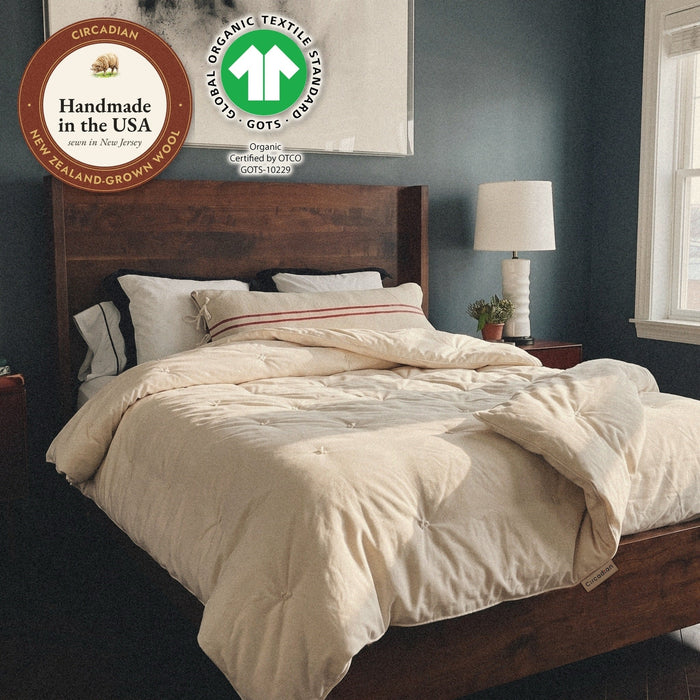
A wool duvet and a wool pillow, a sealed protector under the pillowcase, and cotton sheets and covers you wash warm every week. Dust mites need the humidity around them above roughly 50 percent, and wool moves moisture off your skin into the fiber so the air stays drier than that. The washable layers remove the skin they feed on and the allergen they leave behind.
Is a wool comforter better than a synthetic one for dust mite allergies?
For the humidity, yes. Ours is a duvet insert, so it goes inside a cover and clips at the corners, and the two words describe the same thing. Polyester holds the moisture you give off in the air against you, and humidity above about half is the range the Asthma and Allergy Foundation of America says dust mites like. Wool moves that moisture into the fiber instead, so the air between you and the bedding sits drier.
Is wool bedding good for dust mite allergies?
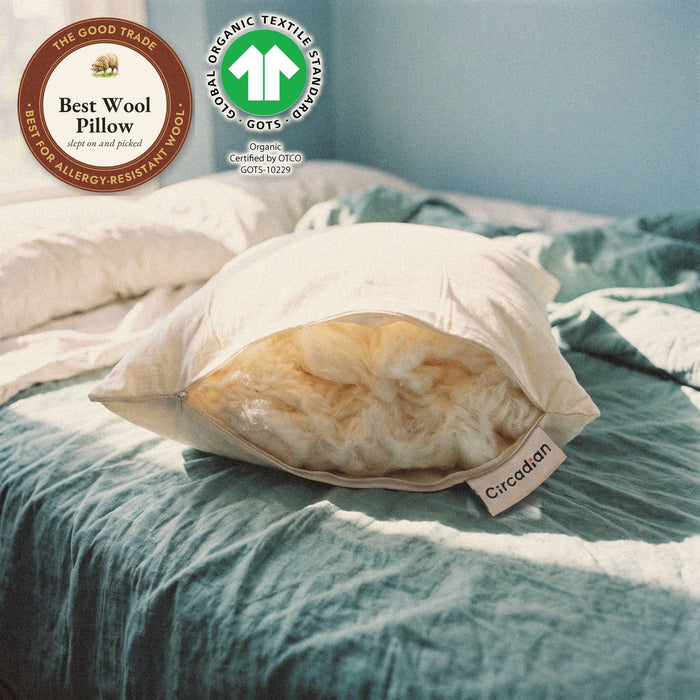
It is the fiber we point people to first. Dust mites cannot drink and take water from the air, and wool holds the air around you too dry for them to settle in. That comes from the fiber rather than from a spray, so it does not wash out. The wool sits inside an organic cotton cover, so the surface against you is cotton you can wash.
Is a wool duvet better than down for allergies?
Down absorbs moisture and holds it in the cluster, which keeps the air under the duvet damp, and damp is what mites need. Wool takes the moisture into the fiber and away from the air. Many people with a dust mite allergy also find feather and down bedding itself is a trigger, which is another reason to move away from it.
Do you treat the bedding against dust mites?
No. Nothing on this page has been sprayed with anything. An antimicrobial or anti-mite finish is a treatment that washes out over a year and gives you a claim with a shelf life. The way wool behaves is a property of the fiber, and it is the same in year ten.
How often should I wash bedding if I have a dust mite allergy?
Every week for the layers that touch you, which is the fitted sheet, the pillowcase and the duvet cover, in warm water. Keep two pillowcases in rotation. The wool duvet and pillow do not go in the machine, which is why they live inside washable cotton. A few hours in a dry spot, twice a year, keeps them fresh.
Do I still need a dust mite cover on the pillow?
A sealed protector still earns its place under the pillowcase, because it keeps skin oil and sweat out of the pillow entirely, and a pillow that never gets fed stays clean for years. Ours is organic cotton on both faces with a waterproof layer sealed between, zipped all the way round, and it does not crinkle.
Are organic cotton sheets good for allergies?
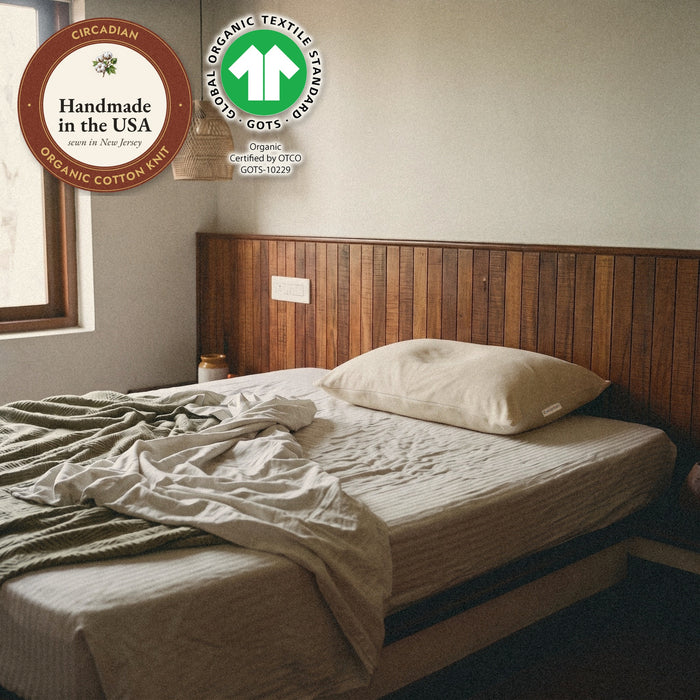
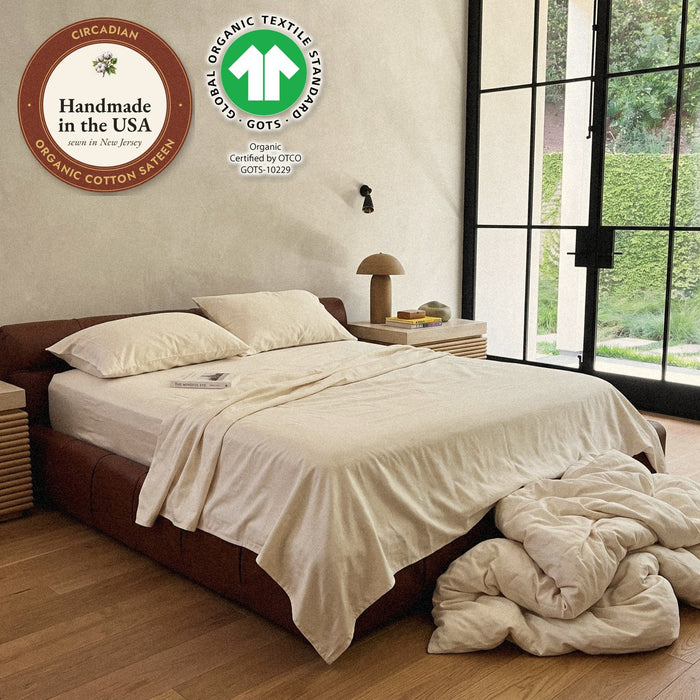
They are the right washable layer. Cotton takes moisture off the skin and goes through a wash every week without wearing out. Ours is undyed and unfinished, so no resin closes the weave and there is nothing added to react to. The certification limits every input in the cloth to a pre-approved list.
Will this bedding cure my allergy?
No, and we would rather say so. It lowers the load in the one place you breathe for eight hours, which is what most people notice in the mornings. It does not treat the allergy itself. If your symptoms are heavy, see an allergist, and use bedding as one part of what they suggest.
Is synthetic bedding worse for dust mites?
For the humidity, yes. Polyester holds the moisture you give off in the air against you, and humidity above about half is the range the AAFA says dust mites like. Wool moves that moisture into the fiber, so the air between you and the bedding sits drier. The other half of it is laundry: a pillow nobody can wash, under a case somebody washes weekly, is where the allergen collects.
What if it does not help?
Send it back inside 60 nights, and free shipping applies. Most people with a dust mite allergy know inside two or three weeks of washing weekly whether the mornings have changed.