Hand-tufted organic duvets

Two duvets, and the choice is about moisture rather than warmth.

Cotton for a duvet that sits lightly over you all year. Wool if you or the person beside you runs hot, because wool moves the moisture your skin gives off instead of holding it against you.

Woman reclining under a Circadian Organic Cotton Duvet with a city view, corner-loop tufts visible
Corner-loop tufts, tied by hand
Handmade in New Jersey since 198160-night sleep trialFree shippingYou set the height

The short answer

Take the wool duvet if anyone in the bed wakes up warm or damp, because wool holds up to 30 percent of its own weight in moisture before the surface feels wet and evens out temperature swings rather than following them. Take the cotton duvet if you want something lighter and simpler that suits most of the year. Both are hand-tufted with corner loops tied by hand, which is what stops the fill sliding into one end of the cover, and both are certified organic as finished products under licence GOTS-10229.

Wool duvet
For warm sleepers, night sweats, and couples who differ
Cotton duvet
Lighter, simpler, suits most of the year
Construction
Hand-tufted, with corner loops tied by hand
Why tufts matter
They stop the fill migrating to one end of the cover
Certification
Certified organic as finished products, licence GOTS-10229
Lifespan
10 to 15 years for both

Two duvets and the cover that goes over them.

Choose the fill first, because that decides how the bed behaves. The cover is the part you will wash and the part that changes how the bed looks.

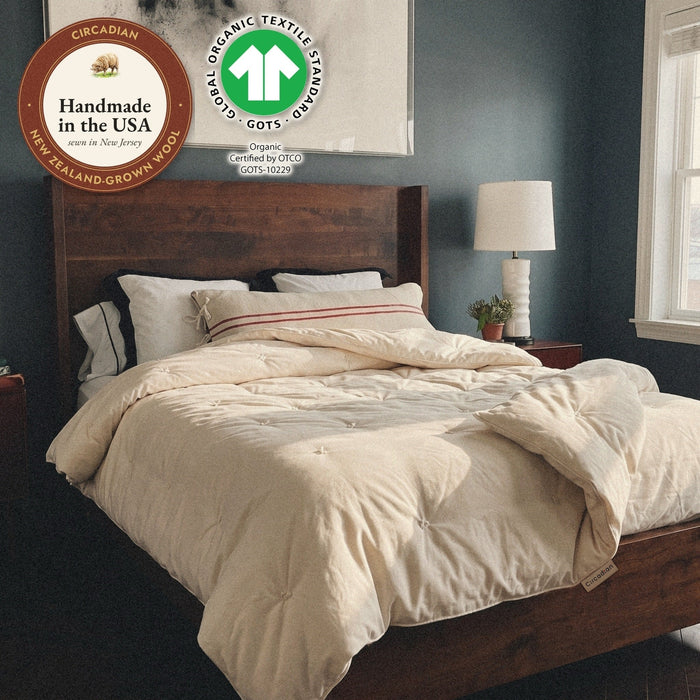
Circadian Organic Wool Duvet on a bed, hand-tufted GOTS-certified organic wool fill with corner-loop tufts, handmade in New Jersey
For warm sleepers

Organic Wool Duvet

Hand-tufted certified organic wool, moving the moisture your skin gives off away from you across the whole bed rather than only under your head.

Best for night sweats, and two people at different temperatures

From $415.00
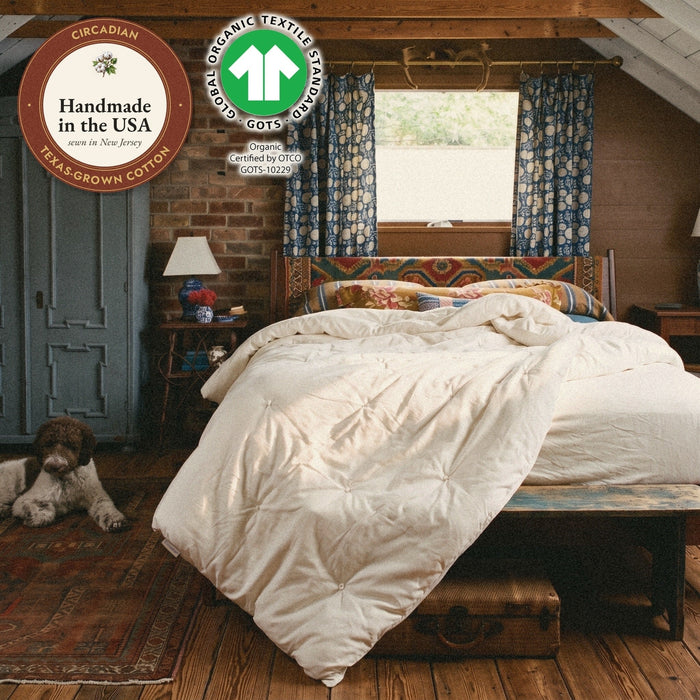
Woman reclining on Circadian Organic Cotton Duvet with NYC view, corner-loop tufts visible
Lighter, year round

Organic Cotton Duvet

Hand-tufted certified organic cotton with the same corner-loop construction. Simpler, lighter, and it suits most rooms most of the year.

Best for a duvet that is never too warm

From $339.00
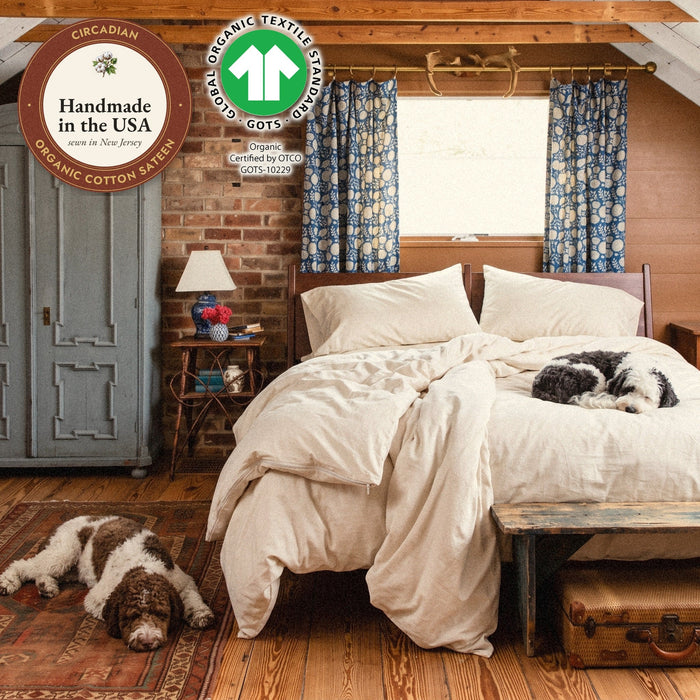
Organic cotton duvet cover on a bed in a cherry-panelled bedroom
Goes over either

Organic Cotton Duvet Cover

300 thread count long-staple organic cotton sateen, same cloth both sides, with a zipper closure along one side and internal ties for the duvet loops.

Best for keeping the duvet clean and changing the look

From $189.00
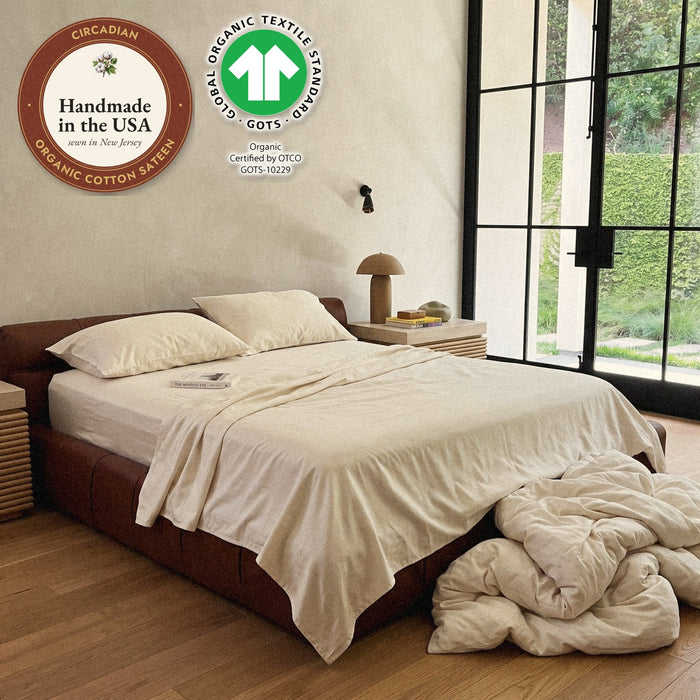
A bed made up in a full organic cotton sheet set
The rest of the bed

Organic Cotton Sheet Set

Fitted sheet, flat sheet and pillowcases in the same sateen, cut and sewn by hand in New Jersey.

Best for one cloth across the whole bed

From $249.00

Why most duvets go lumpy

The fill ends up at one end of the cover, and it never comes back.

This is the ordinary failure of a duvet, and it is a construction problem rather than anything to do with the quality of the material inside it.

1

The fill is loose inside

A duvet that is simply a bag of fiber has nothing holding the fiber in place relative to the shell.

2

You shake it out every morning

Which moves the fill, a little, in whichever direction you happened to shake.

3

It gathers at one end

Now half the bed is thick and warm and the other half is thin, and no amount of shaking evens it up again.

4

The cover makes it worse

A cover with no internal ties lets the whole duvet slide inside it, so the two of them drift apart as well.

Tufting fixes the first half. Corner loops and internal cover ties fix the second. Neither is exciting and together they are the difference between a duvet that is still even in year eight and one that is a lump by year two.

Circadian Organic Wool Duvet on a bed, hand-tufted with corner-loop tufts

How they are built

Tufted by hand, so the fill cannot travel.

Both duvets are hand-tufted, which means the fill is stitched through at intervals across the whole area rather than left loose in a shell. The fill can breathe and lift, and it cannot migrate, which is what keeps the warmth even across the bed for the life of the duvet.

Each corner also carries a loop tied by hand. Those loops tie into the internal ties of our duvet cover, so the duvet and the cover stay registered to each other instead of drifting apart in the night.

4corner loops, tied by hand
10 to 15 yearsexpected life of either duvet
Macro of raw organic wool fleece, the fill inside the Circadian Organic Wool Duvet

Why wool changes the bed

It moves moisture, which is what temperature complaints usually are.

People describe a duvet as too hot when what is happening is that moisture from their skin has nowhere to go and sits against them. Wool takes up to 30 percent of its own weight in moisture before the surface feels damp at all, so the layer next to you stays dry.

It also gives off a little heat as it absorbs and draws heat back as it releases, so it flattens the swings in a room rather than following them. That is why a wool duvet works for two people who run at different temperatures, where a heavier or lighter tog rating just moves the problem from one of you to the other.

30%of its weight in moisture, before it feels damp
The zipper closure along one side of the Circadian organic cotton duvet cover

The cover

Same cloth both sides, and a zip rather than buttons.

Our duvet cover is long-staple organic cotton sateen woven at 300 threads to the inch, the same cloth on both faces, so there is no thin reverse side that gives the game away. It closes with a zipper along one side rather than buttons or ties, which is faster to change and does not leave gaps.

Internal ties at the corners take the duvet's loops. It is a two-minute job the first time and it is the reason the duvet stays where you put it.

300thread count, long-staple organic cotton

Wool duvet against cotton duvet.

Same construction, same certification, two quite different beds.

Circadian duvets compared, 2026.
What matters Organic Wool Duvet Organic Cotton Duvet
Moisture Takes up to 30% of its weight into the fiber Breathes well, and does not move moisture the way wool does
Temperature Evens out the swings in the room Lighter overall, rarely too warm
Two people, different temperatures The one to take Works if you are both similar
Weight A little more substantial Lighter over you
Construction Hand-tufted, corner loops tied by hand Identical
Certification Certified organic as a finished product Certified organic as a finished product
Lifespan 10 to 15 years 10 to 15 years
Care Wash the cover, air the duvet in sun Wash the cover, air the duvet in sun

Which duvet is yours.

One of you runs hot and the other is always cold.

Wool. It responds to each person rather than holding one temperature, which is the only real answer to this that does not involve two duvets.

Organic Wool Duvet ›

You wake up damp.

Wool, and consider the wool pillow too. Damp is a moisture problem and wool is the only fill here that moves moisture into itself.

Organic Wool Duvet ›

You want something light that works all year.

Cotton. Simpler, lighter over you, and rarely too warm in a normal bedroom.

Organic Cotton Duvet ›

You already have a duvet you like.

Then the cover is the upgrade. Same cloth both sides, zip closure and internal ties so it stops sliding around.

Organic Cotton Duvet Cover ›

The ones we hear most.

Wool or cotton duvet?

Wool if anyone in the bed wakes up warm or damp, because it moves moisture off your skin and evens out temperature swings. Cotton if you want something lighter and simpler that suits most of the year. Both are hand-tufted and both carry the same certification.

Is a wool duvet too warm for summer?

It is the opposite of what people expect. Wool regulates rather than insulates, giving off a little heat as it takes moisture in and drawing heat back as it releases it. The same duvet suits January and August, which is exactly why sheep wear it year round.

What tog rating are they?

We do not give one, because tog measures insulation and wool's usefulness is in moisture handling rather than raw insulation, so a number would mislead you. Choose by whether you or your partner wakes up warm, which predicts your experience far better.

Why does hand-tufting matter?

It stitches the fill through at intervals so it cannot migrate to one end of the cover. That migration is how most duvets fail, and it has nothing to do with the quality of the fill. Tufting is the construction detail that keeps warmth even across the bed for a decade.

How do you wash a duvet?

Wash the cover, not the duvet. Take the cover off and machine wash it cool, and give the duvet a few hours of sun and air on a dry day two or three times a year. A washing machine will felt wool and clump cotton fill.

Do I need a duvet cover?

Yes, and it is what makes the duvet last. The cover takes all the skin contact and all the washing, and the duvet inside stays clean for years. Ours has internal ties that take the duvet's corner loops so the two stay together.

Are the duvets certified organic?

Both are certified as finished products, which covers the fill as well as the shell, under licence GOTS-10229 issued by Oregon Tilth. Write to us and we will send the certificate.

How long does a duvet last?

Ten to fifteen years for either, which is far longer than a pillow because a duvet is not compressed under the weight of your head every night. Wash the cover and air the duvet and it will see out most of the bedding you buy alongside it.

Are they heavy?

The wool is a little more substantial than the cotton and neither is a weighted duvet. If you want the sensation of weight specifically, that is a different product and not one we make.

What sizes do they come in?

Twin through King, and the duvet cover is cut to match. If you are between sizes or have an unusually deep mattress, write to us before ordering rather than guessing.

Choose the fill, then the cover.

The fill decides how the bed behaves and the cover is what you wash. Sixty nights to be sure, handmade in our New Jersey workshop.

See the duvets