On the nightstand
Cotton and kapok
Both of these go into our pillows. The cotton stem stands in the jar, and the split kapok pod lies beside it with its soft white fiber showing.

Our story
Most pillows hide polyester, foam or chemical finishes under an organic cover. Ours are cotton, wool, kapok, buckwheat or latex, made by hand to order in New Jersey.
Shop pillows
Under that certified cover, the cotton can be grown with synthetic pesticides, cut with polyester to save money, or finished with formaldehyde resins and PFAS the label never mentions.
Your face rests on that for a third of your life. We started Circadian to make the pillow we kept looking for and couldn't buy, with the same care inside as outside.

My mission is to reset what you expect from the things you sleep on.
I started Circadian from my apartment. I was tired of paying for things that didn't feel worth it and didn't fit the way I live, outside as much as I can and unbothered about what sits against my skin eight hours a night.
I designed every pillow myself and picked every material: organic cotton, wool, kapok, buckwheat hulls and latex. Most pillows are foam and polyester that off-gas and shed microplastics. Mine are plants and wool, sewn by hand in New Jersey and made to order.
I like things that are simple to use, made with integrity, and that do what they promise. When something manages all three, it earns a permanent place in your life. I set out to make that pillow, and I want you to sleep on it.
Jacob
We looked a long time before finding a GOTS certified workshop in New Jersey. GOTS, the Global Organic Textile Standard, audits it on site every year. It was set up for organic bedding and gave us full control of the fill, cover and stitching.
Most natural pillow brands ship from overseas warehouses. We chose New Jersey for shorter waits, mistakes we can fix the same day, and a supply chain we can stand in. Each pillow is filled by hand and checked before it ships.

Five natural materials make our six pillows. Scroll to see how each one feels.
On the nightstand
Both of these go into our pillows. The cotton stem stands in the jar, and the split kapok pod lies beside it with its soft white fiber showing.
Organic Cotton
Organic cotton inside and out, packed firm and full, so your head rests on top of it instead of sinking in. It feels like the cotton pillow a lot of us grew up on.
Wild-Harvested Kapok
You sink into it the way you sink into down, and you stay cool. Wild-harvested kapok is the lightest natural fiber on Earth. Each strand is a hollow tube that is mostly air, so your warmth passes through instead of building up.
Buckwheat
Buckwheat hulls flex under your head and then lock together, so your neck stays where you set it all night. For a softer, quieter side, the Buckwool Hybrid has hulls on one side and organic wool on the other.
Two more fills
The Organic Wool Pillow is naturally hypoallergenic, with a springy, medium feel that keeps you at one temperature all night. The Tree-Tapped Latex Pillow feels light and bouncy, a soft hug that springs back. See all six pillows.
Two of ours are certified whole, so chlorine bleach, formaldehyde and PFAS stay out of every layer under your face.
License GOTS-10229 is issued by Oregon Tilth and renewed on an on-site audit every year. Ask us for the certificate and we will send it.
The latex page tells you to skip it if you have a latex allergy. Cotton, wool or kapok will serve you better.
The certifications page names the two pillows certified inside and out, and the four with an organic cotton cover over a natural fill.
Cotton from Texas, wool from New Zealand, kapok from Indonesia, buckwheat from US farms and latex from Sri Lanka. Each one is named on its pillow's page, and our sustainability page shows why each place grows it best.
Six pillows, softest to firmest. Start with how you sleep, or take the 30-second quiz if three pillows have already let you down.
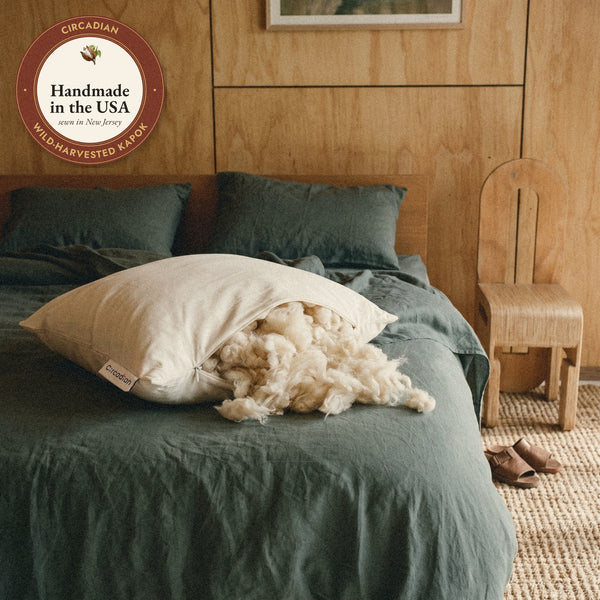 Wild-Harvested Kapok Pillow
The softest, close to down. Its pods fall from wild trees and are gathered by hand.
From $79
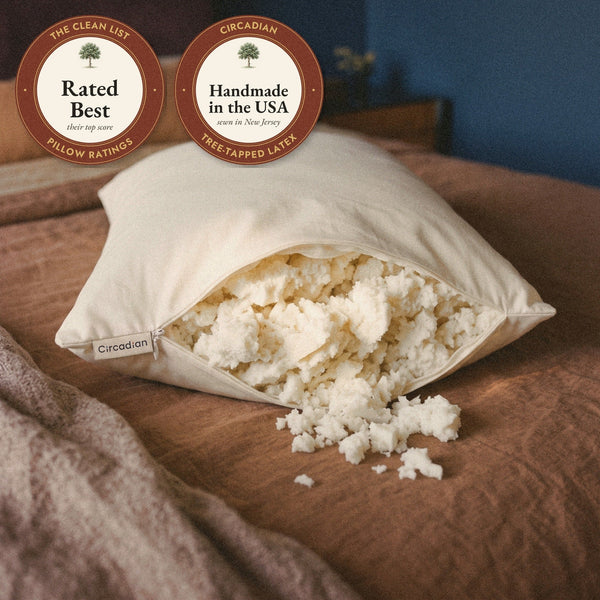 Tree-Tapped Latex Pillow
Soft and springy. It lifts your head instead of swallowing it.
From $89
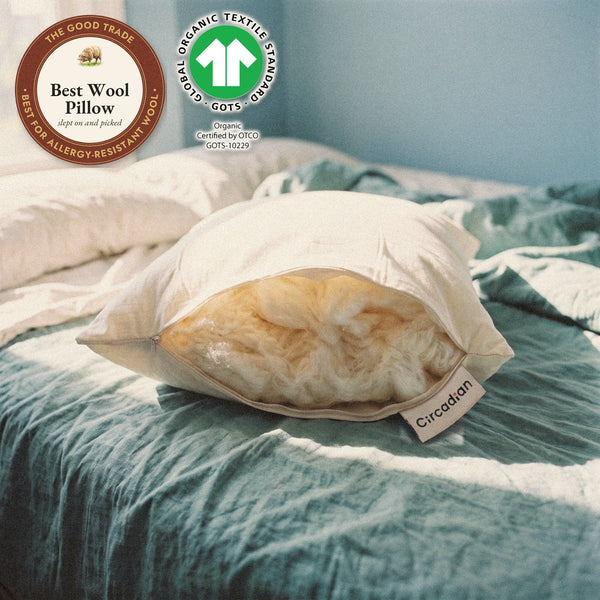 Organic Wool Pillow
Medium and springy. It gives, then comes back, and keeps you cool by keeping you dry.
From $99
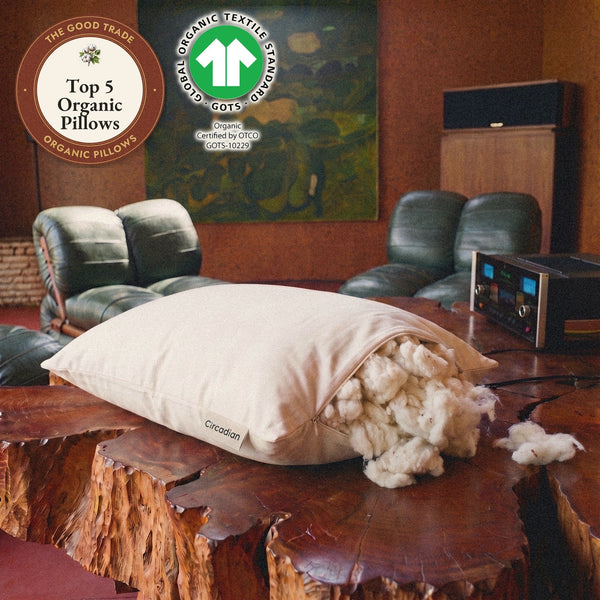 Organic Cotton Pillow
Firm, plump and old-school. Your head rests on top of it instead of sinking in.
From $89
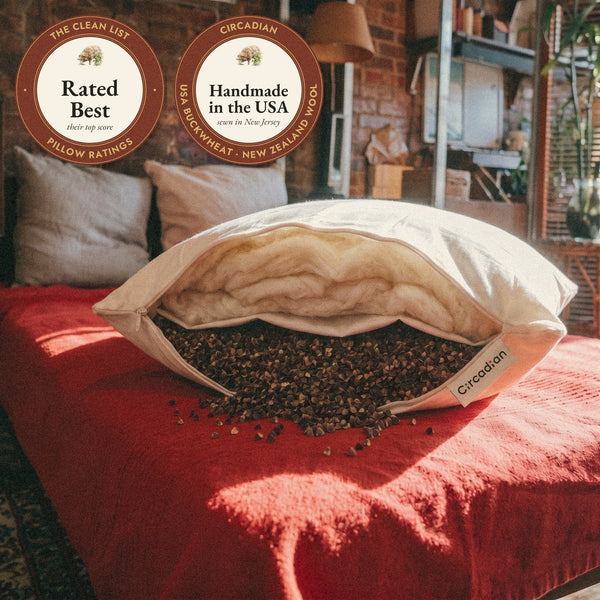 Buckwool Hybrid Pillow
Firm hulls on one side, soft wool on the other. Flip it.
From $99
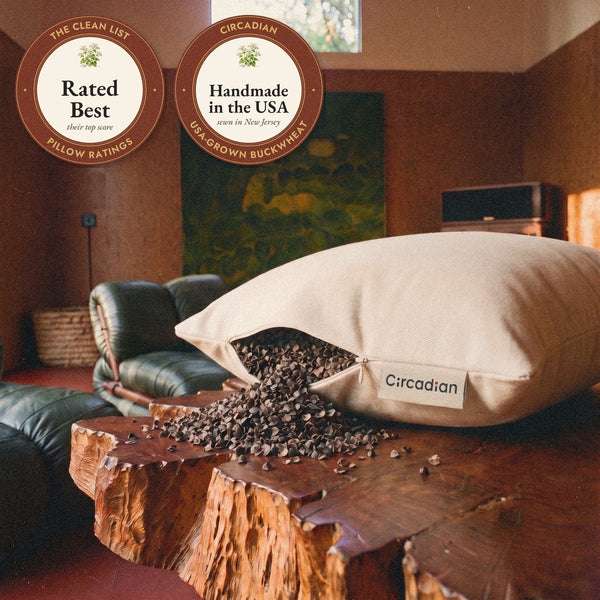 Buckwheat Pillow
The firmest. It holds the exact shape you press into it.
From $89
Not sure? Take the 30-second quiz and it picks for you.
A homemade cat bed with a kapok mattress
Wild-Harvested Kapok PillowA buckwheat skeptic tries it
Buckwheat PillowWhat kapok feels like
Wild-Harvested Kapok PillowHow the wool feels
Organic Wool PillowA physician assistant reviews buckwheat
Buckwheat PillowThe cotton pillow, out of the box
Organic Cotton Pillow Top Quality Store on GoogleSee how Google scores our shipping, returns and prices.