

The natural sleeper store
Bedding made from plants and wool instead of foam and polyester, so you're not breathing in chemicals all night.
60-night home trial · Free shipping · Handmade in New Jersey
As featured in
-
 “Best for allergy-resistant wool”
-
 “I love their Organic Cotton pillow!”
-
 “Basically two pillows in one!”
-
 “One of our favorite options”
-
 “Why a certain fill will likely work for you”
-
 “Crafted from exclusively natural materials”
-
 “Best of both worlds!”
-
 “Among the healthiest pillows I’ve evaluated”
-
 “Plant fiber start to finish”
-
 “Complete sourcing transparency”
-
 “The easiest switch on this whole list”

Shop the pillows
Six pillows, all natural. Every one opens at a zipper, so you set the height. The fill tops up or swaps out, so nothing about the pillow is built to be thrown away.
-
 Best seller
Organic Cotton Pillow
Feels like: a firm, plump, old-school pillow
Best for: side and back sleepers who want pure cotton
From $89
Best seller
Organic Cotton Pillow
Feels like: a firm, plump, old-school pillow
Best for: side and back sleepers who want pure cotton
From $89
-
 Buckwheat Pillow
Feels like: sand that molds to your neck
Best for: neck pain and hot sleepers
From $89
Buckwheat Pillow
Feels like: sand that molds to your neck
Best for: neck pain and hot sleepers
From $89
-
 Organic Wool Pillow
Feels like: soft, springy, never hot
Best for: allergies and hot sleepers
From $99
Organic Wool Pillow
Feels like: soft, springy, never hot
Best for: allergies and hot sleepers
From $99
-
 Wild-Harvested Kapok Pillow
Feels like: soft, fluffy down, from a tree
Best for: down lovers, without the feathers
From $79
Wild-Harvested Kapok Pillow
Feels like: soft, fluffy down, from a tree
Best for: down lovers, without the feathers
From $79
-

 Buckwool Hybrid Pillow
Feels like: soft wool, flip for buckwheat
Best for: a softer, quieter buckwheat
From $99
Buckwool Hybrid Pillow
Feels like: soft wool, flip for buckwheat
Best for: a softer, quieter buckwheat
From $99
-

 Tree-Tapped Latex Pillow
Feels like: light and bouncy, never sinks
Best for: leaving memory foam for natural
From $89
Tree-Tapped Latex Pillow
Feels like: light and bouncy, never sinks
Best for: leaving memory foam for natural
From $89









Get Black Friday four days early
Join the early list and your own codes arrive on Monday, November 23, four days before the sale opens to everyone. It is up to 20% off pillows, comforters and sheets, all made by hand in New Jersey from cotton, wool, kapok, latex or buckwheat.
What you're not sleeping on
You set the height
Most people with a sore neck never think about pillow height. Every Circadian pillow opens at a zipper, so you can set yours.
-
It arrives full
About 30% more than most people keep, so you can shape it to your own neck.
-
You take some out
Open the zipper on the short end and take a little out, until your head sits level with your shoulders. Keep what you took out in case you want it back.
-
Sleep on it for 60 nights
Give it a few weeks before you judge it. If it is not the one, tell us within 60 nights. We send a return label and refund you once it reaches the workshop, with no restocking fee.
The pillow people keep.
If you've sent more pillows back than you've kept, you're our customer.
4.7
out of 5
5★
283
4★
35
3★
21
2★
10
1★
0
Read all 349 reviews
The three-star ones are in there too.
“I have owned more pillows than I have owned houses and I have owned 12 houses.” This is by far the only pillow to use if you don’t want to wake up with sore shoulders or neck. I have replaced all the pillows in my house with this pillow.
I have compressed discs in my neck, and I have spent hundreds of dollars over the past 6 months trying to find one that will help me sleep. Every pillow I bought caused me to wake up in even more pain than the night before!! The buckwheat pillow is life-changing!! I have slept through the night and wake up with no pain!!
I was leery to try another expensive pillow without some sort of trial period after being very let down by a different company's natural fiber pillow… I don't hear anything at all with the buckwheat! It does stay fresh and cool as well, but most importantly it actually holds my head/neck up and in place. Which allows me to actually get rest instead of always adjusting.
I've been a buckwheat pillow customer for the last 7 years and I can say that Circadian has the highest standards of quality paired with incredible customer service. Very very impressed and would not hesitate to send anyone their way.
I have spent years searching for a pillow that feels supportive and comfortable all night. I have finally found it. I absolutely love the Buckwool pillow. I removed a bit of the material to get it to exactly how I want it… I rarely wake up with neck pain now.
I find myself switching between the two and loving the feel of both. I haven't woken up with a sweaty head with either and that's an amazing feeling especially in the AZ summer. The buckwheat side is a lot quieter and more comfy/soft than others I've tried in the past.
I was looking for an organic down feather alternative and the kapok-filled pillow is actually better!… It's firm enough to support my neck while being soft and moldable at the same time.
I have tried at least 10 different pillows in the last 3 years. Nothing has worked out except for this wool pillow. I have chronic neck pain which has been greatly reduced. I am very happy with my new pillow.
I have pretty bad chemical sensitivity (housebound most of the time)… I try to only buy totally safe, non-toxic products. I found this pillow to be very safe and non-toxic, and the packaging was fragrance free which is always a huge plus.
I ordered this pillow to replace my very old (but beloved) down pillow and I'm so glad I did. It is heavenly!… I advise you to heed the recommendation given by the quiz. I ordered cotton initially despite the quiz giving me kapok as a result… the quiz was right.
The quality craftsmanship and materials is evident… when I asked if extra stuffing were available for the second one I'm using as a knee pillow, they not only pointed me to the right place on their site, but also created a new, smaller 1-lb. refill size based on my request.
I requested a bit more filling for my two pillows, they seemed a bit flat for me, and the customer service was amazing. I received a hefty bag of extra organic cotton filling. After trying these pillows, you'll never go back to synthetic.
This is the best pillow I've had. It gives the right support around the head and neck. It doesn't sink or move and stays cool through the night. Also, it's easy to make small adjustments to make it fit perfectly.
Find your pillow
Five questions, about 30 seconds. You get your match and $10 off your first pillow.
Real people, real bedding
-
A homemade cat bed with a kapok mattress
Wild-Harvested Kapok Pillow -
A buckwheat skeptic tries it
Buckwheat Pillow -
What kapok feels like
Wild-Harvested Kapok Pillow -
How the wool feels
Organic Wool Pillow -
A physician assistant reviews buckwheat
Buckwheat Pillow -
The cotton pillow, out of the box
Organic Cotton Pillow
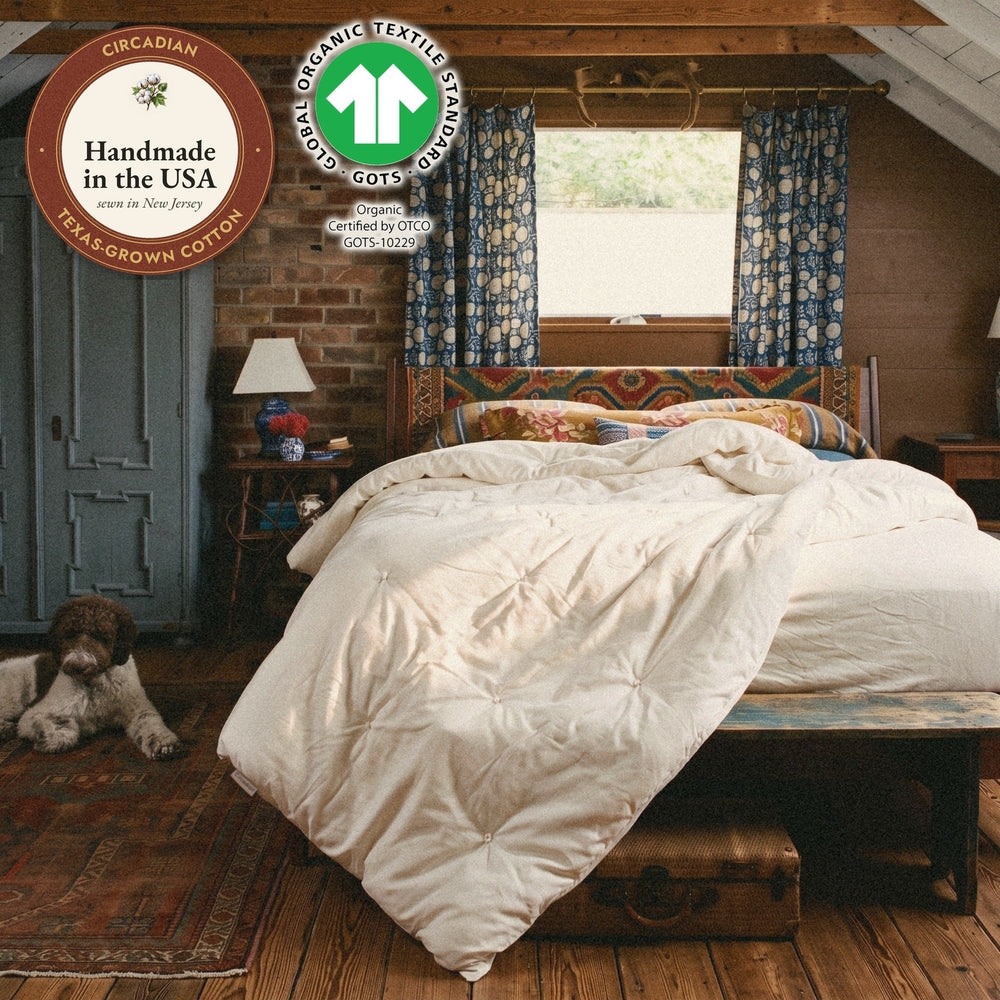
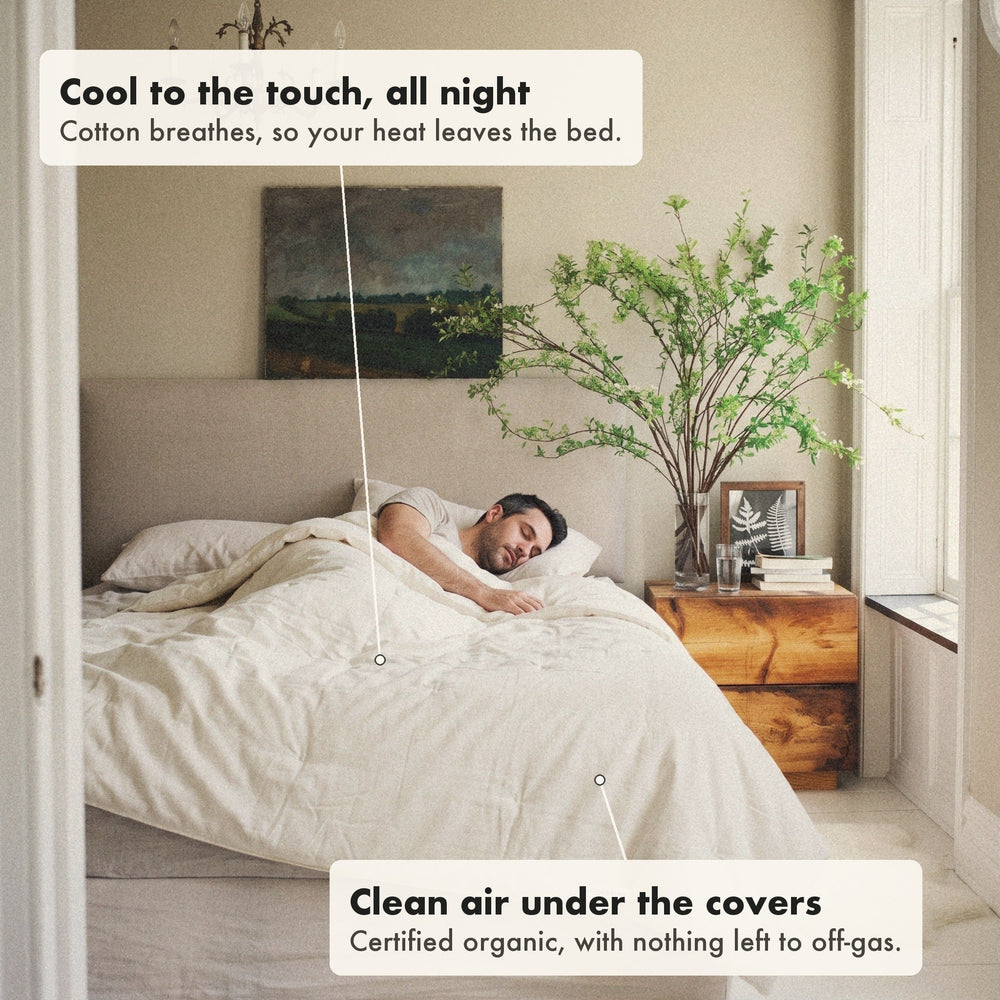
Organic comforters, made like our pillows.
Filled and sewn by hand in New Jersey, and certified organic, so chlorine bleach, formaldehyde and PFAS stay out. Each one lasts 10 to 15 years under a cover.

Made by hand in New Jersey
Every pillow is filled and sewn by hand in a New Jersey workshop that has been making pillows since 1981.
The cotton and wool pillows are certified organic under the Global Organic Textile Standard (GOTS). It covers the finished pillow, bans chlorine bleach, and sends an inspector to the workshop every year.
Read our story
