GOTS Certified Organic, Texas grown

The pillow that gives out in years, not weeks.

Cotton is the densest fiber we put in a pillow. It compresses slowly and evenly under your head over months and years, instead of collapsing into a divot by the second season.

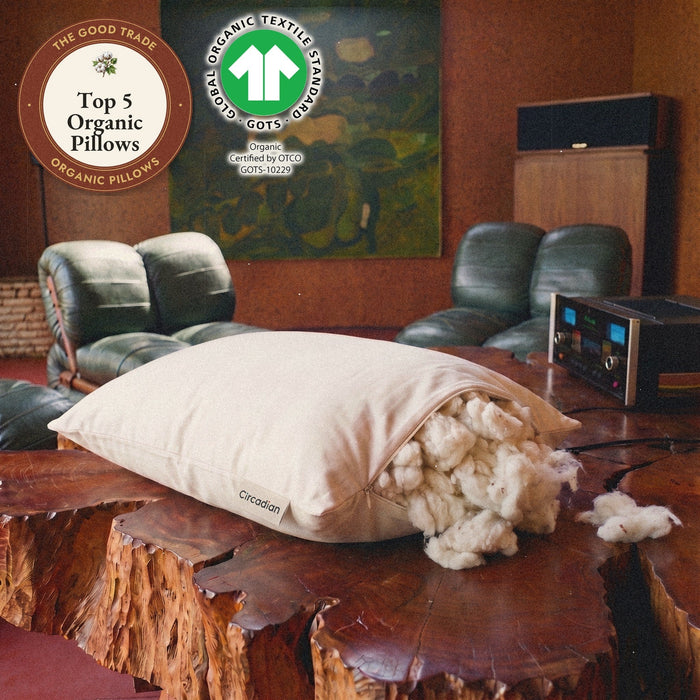
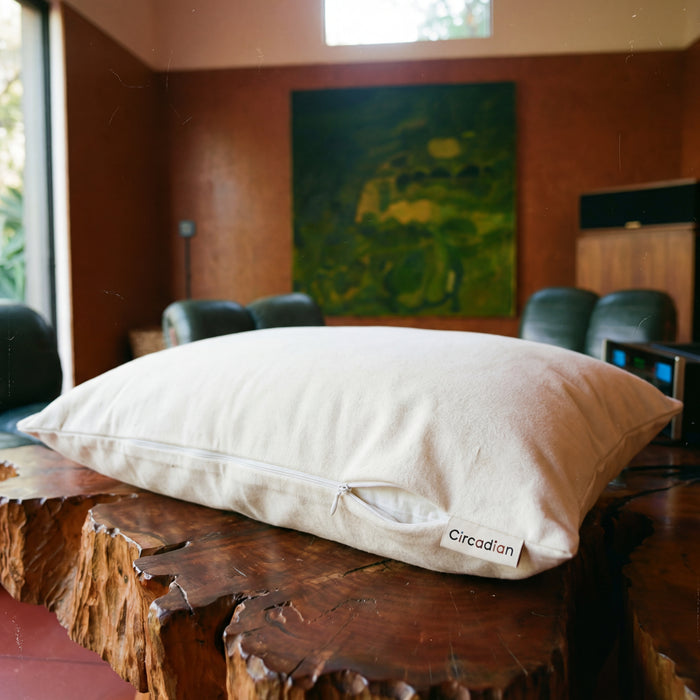
Circadian Organic Cotton Pillow with cotton fill bursting from the side zipper, city view behind
GOTS Certified Organic, license GOTS-10229
Handmade in New Jersey since 198160-night sleep trialFree shippingYou set the height

The short answer

Organic cotton is the choice for a quiet, medium-firm pillow that keeps its shape and holds no smell of anything. It is the most tightly packed of the fibers we use, so your head presses it down slowly and evenly rather than punching a hole in it. It makes no sound at all, it needs no breaking in, and it is GOTS Certified Organic as a finished product, the cotton inside as well as the cover, under license GOTS-10229. It is also our best-selling pillow.

Feel
Medium, dense, holds its shape
Sound
Silent
Where it grows
Texas grown, sewn in New Jersey
Certification
GOTS Certified Organic, license GOTS-10229, issued by Oregon Tilth
Break in
None, it feels the same on night one as night thirty
Lifespan
2 to 4 years, longer with a refill

Organic cotton, across the bed.

The pillow, the body pillow, the duvet, the cases and sheets that go over all of it, and a bag of cotton for bringing the height back.

Two Circadian Organic Cotton Pillows stacked, GOTS-certified organic cotton fill and cover, handmade in New Jersey
Best seller

Organic Cotton Pillow

Dense organic cotton in a certified organic cotton cover, GOTS Certified Organic as a finished product. Silent, medium firm, and it needs no getting used to.

Best for back and side sleepers who want a steady, quiet pillow that lasts

From $79.00 See the pillow ›
Circadian Body Pillow in a cream organic cotton cover resting lengthwise across a made bed, morning light.
Full length

Body Pillow

The same organic cotton down the length of your body, for the knee and hip support that stops a side sleeper rolling forward. Also available with wool, kapok or latex inside.

Best for side sleepers, pregnancy, and anyone who hugs a pillow

From $249.00 See the pillow ›
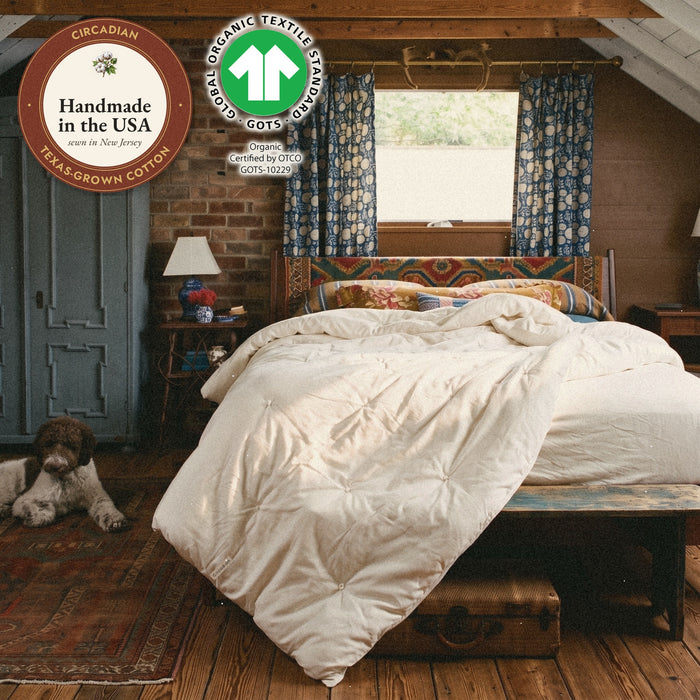
Woman reclining on Circadian Organic Cotton Duvet with NYC view, corner-loop tufts visible
Over the bed

Organic Cotton Duvet

Hand-tufted GOTS Certified Organic cotton, with corner-loop tufts that keep it from bunching at one end of the cover.

Best for year-round bedding that is not too warm

From $339.00 See the pillow ›
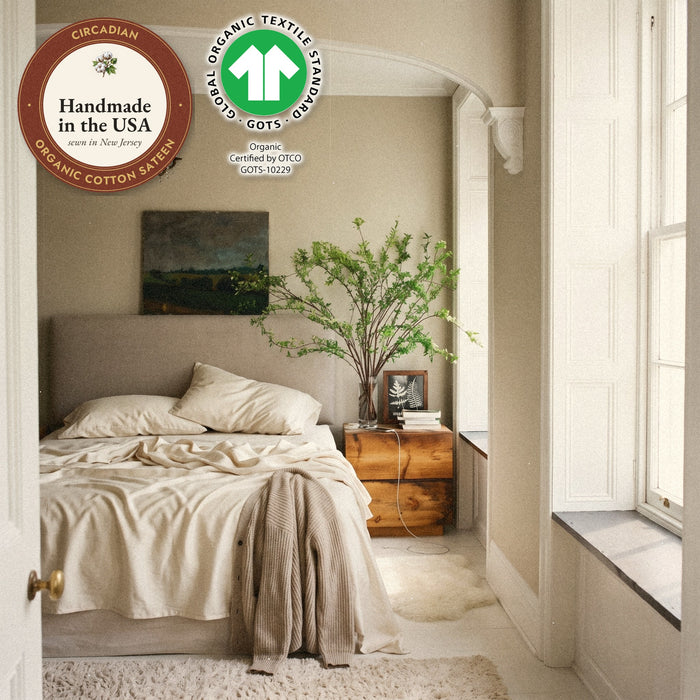
Two pillows in organic cotton pillowcases at the head of a bed
Over the pillow

Organic Cotton Pillowcases

300 thread count long-staple organic cotton sateen, cut and sewn by hand in New Jersey. Sold as a pair.

Best for keeping the pillow clean without a synthetic case over it

From $79.00 See the pillow ›

Why the last one flattened

Most pillows do not wear out. They collapse in one spot.

A loose fiber pillow fails where your head sits. The fibers there get pushed aside night after night while the corners stay full, and one morning you are lying in a crater with a ridge of pillow around it.

1

The fill is loose to start

It feels generous in the first week, because there is air in it as much as fiber.

2

Your head pushes fiber sideways

Every night, in the same spot, in the same direction. The fiber has somewhere to go, so it goes.

3

A crater forms

The middle drops and the edges stay high. Now the pillow holds your head lower than the shoulder underneath it.

4

You buy another one

Two years, sometimes one, and the whole thing goes in a bin because the shape went.

Cotton is packed dense enough that there is nowhere for the fiber to be pushed. It gives way slowly and evenly across the whole pillow instead of failing in one place, which is why the shape is still there years later.

Macro of raw organic cotton bolls, the fill material used in the Circadian Organic Cotton Pillow

Inside the pillow

Density is the whole reason it lasts.

Cotton is the most tightly packed of the fiber fills we use, noticeably denser than wool or kapok. That density is what stops your head from carving a channel through it. The fibers have no room to migrate, so they compress together instead of moving apart.

The trade you make for that is weight and a firmer first impression. What you get back is a pillow whose shape at year two looks like its shape at week one, and a surface that never develops the ridge around a hollow.

2 to 4 yearsand longer once you refill it
Silentthe only sound is the pillowcase
Two Circadian pillows stacked on a wicker trunk against a stone wall, woven tags showing

The list most pillow makers hope you never read

GOTS covers the cotton inside, not only the cloth outside.

The common trick in this category is to certify the outer fabric and describe the whole pillow as organic. Ours is GOTS Certified Organic as a finished product, the cotton inside as well as the cover, under license GOTS-10229 issued by Oregon Tilth. Ask us for the certificate and we will send it over.

The standard bans chlorine bleaching and allows only oxygen-based methods, and it requires wastewater treatment at every wet-processing facility along the way. Conventional cotton growing uses 42 million pounds of pesticides a year in the United States alone. What that adds up to for you is that the air closest to your face for eight hours a night is just fiber.

GOTS-10229our license number, Oregon Tilth
42M lbof pesticides a year in conventional US cotton
Woman side-sleeping on the Circadian Organic Cotton Pillow

Make it yours

You set the height, and it stays where you set it.

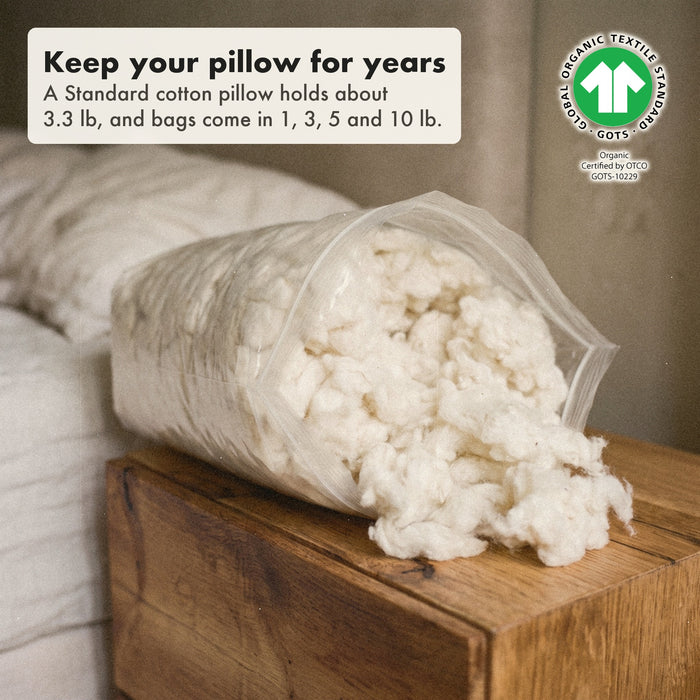
It arrives full, about a third more than most people keep, because it is easier to take some out than to wish you had more. Open the side zipper, pull out handfuls of cotton, and stop when your head sits level with your shoulders.

Side sleepers keep more, because there is more distance between ear and shoulder to fill. Back sleepers keep less. Because cotton is dense, the height you set is the height you keep for a long time, and when it does settle a refill through the same zipper puts it back.

3 nightson a height before you change it again
60 nightsbefore you have to decide

Cotton against the other fibers on this site.

All three are quiet and natural. They fail differently, feel different, and suit different sleepers.

Circadian fiber fills compared: organic cotton, organic wool, wild-harvested kapok.
What matters Organic Cotton Wool and Kapok
Density The densest fiber we use Wool is springier, kapok is the lightest natural fiber there is
Feel Medium and steady Wool has a gentle spring, kapok feels close to down
How it fails Slowly and evenly across the whole pillow Wool settles, kapok clumps unless you fluff it
Upkeep None beyond washing the cover Wool wants sun a few times a year, kapok wants a fluff every few days
If you sleep hot Fine, but wool moves moisture better Wool is the one to take
Certification Certified organic as a finished product, the cotton inside as well as the cover Wool carries the same finished-product claim; the kapok is wild-harvested, in an organic cotton cover
Lifespan 2 to 4 years, longer with a refill Wool 3 to 5 years, kapok 2 to 4

Which cotton is yours.

You want one pillow and no fuss.

The cotton pillow. Nothing to break in, nothing to fluff, no sound, and the shape holds for years.

Organic Cotton Pillow ›

You roll forward onto your front in the night.

A body pillow between your knees stops the roll and takes the twist out of your lower back. Cotton keeps it firm down the whole length.

Body Pillow ›

Your pillow has quietly gone lower.

A bag of GOTS Certified Organic cotton through the side zipper puts the height back rather than putting the pillow in a bin.

Organic Cotton Refill ›

You want it to last closer to four years than two.

Put a protector under the case. It keeps skin oil and moisture out of the cotton, and that is what ages a fiber pillow faster than anything else.

Pillow Protector ›

The ones we hear most.

Are organic cotton pillows firm?

Medium, and denser than it sounds. Cotton is the most tightly packed fiber we use, so it feels more substantial than a wool or kapok pillow at the same height. Take cotton out through the side zipper until your head sits level with your shoulders and it softens to wherever you want it.

Do cotton pillows go flat?

They settle rather than collapse. Because the fiber is packed dense there is nowhere for it to be pushed aside, so it compresses slowly and evenly across the whole pillow instead of forming a crater where your head sits. Two to four years in, a refill through the side zipper brings it back.

Is the Circadian cotton pillow GOTS Certified Organic?

Yes, as a finished product, which means the cotton inside as well as the cover, under license GOTS-10229 issued by Oregon Tilth. Most brands certify only the outer fabric and call the pillow organic. Ask us for the certificate and we will send it.

Why does my new cotton pillow have a smell?

That is what cotton smells like. Unbleached, unscented cotton has a faint sweet, slightly dusty smell of the plant, and it fades within a week or two of use. Nothing was added to create it and nothing was added to cover it, which is why you can smell the material at all. Our organic certification is audited in person every year.

How do you wash an organic cotton pillow?

Wash the cover, not the whole pillow. Unzip the side, take the cotton out, machine wash the cover cool and hang it to dry, then put the cotton back. Washing loose cotton fill mats it into lumps, so keep it out of the machine.

Is cotton good for side sleepers?

Yes, as long as you keep enough height in it. Side sleepers need more pillow than back sleepers because the gap from ear to shoulder is wider, so leave more cotton in and check that your head sits level rather than tipped up or dropped down.

Cotton or wool pillow?

Cotton for a dense, silent pillow that holds its shape and asks nothing of you. Wool if you wake up warm or damp, because moving moisture off your skin is the thing wool does that nothing else does. Both are GOTS Certified Organic as finished products.

How long does a cotton pillow last?

Two to four years, and longer once you start refilling it. A protector under the pillowcase pushes it toward the top of that range, because skin oil and moisture age a fiber pillow faster than use does.

Where does the cotton come from?

Texas grown, and cut and sewn by hand in our New Jersey workshop, which has been making pillows since 1981.

Is an organic cotton pillow worth it?

It depends on whether you want to stop buying pillows. Conventional cotton growing uses 42 million pounds of pesticides a year in the United States alone, and the certification we hold covers the cotton inside the pillow as well as the cover cloth, which is a stronger claim than the usual one. On top of that the density means the shape is still there years later, and a refill extends it again rather than sending the pillow to a bin.

One pillow, and years of not thinking about it.

Set the height on the first night and it holds. Sixty nights to be sure, handmade in our New Jersey workshop.

See the cotton pillows