Body pillows get bought for very different reasons. Pregnancy is the most common one. Side sleeping with chronic shoulder pain comes up nearly as often. Post-surgery recovery, scoliosis support, anxiety relief, and the simple act of having something to hold while sleeping cover most of the rest.
The material should match the reason a person reached for a body pillow in the first place. A pregnant hot sleeper wants to stay cool. A chemical-sensitive sleeper wants a fiber that never met a synthetic compound. A side sleeper with shoulder pain wants something that conforms instead of flattening out. Someone who just wants something soft to hold can pick whatever feel they prefer.
Most body pillows sold today are polyester fiber or foam. Polyester clumps and goes flat by month six. Foam holds heat against your skin for the entire night. Both shed microplastics into your bedding for years, and neither was made with the assumption that you'd be sleeping with most of your body in contact with it.
The Circadian Body Pillow comes in four natural materials, the same four we use in our standard pillows. Wild-harvested kapok if you need a fiber that reaches you without a chemical stage. Tree-tapped slow-pour Dunlop latex for the soft conforming feel of memory foam without the heat. Organic cotton if you want density that holds shape for years. Organic wool for night sweats, and for air that stays too dry for dust mites to settle in.
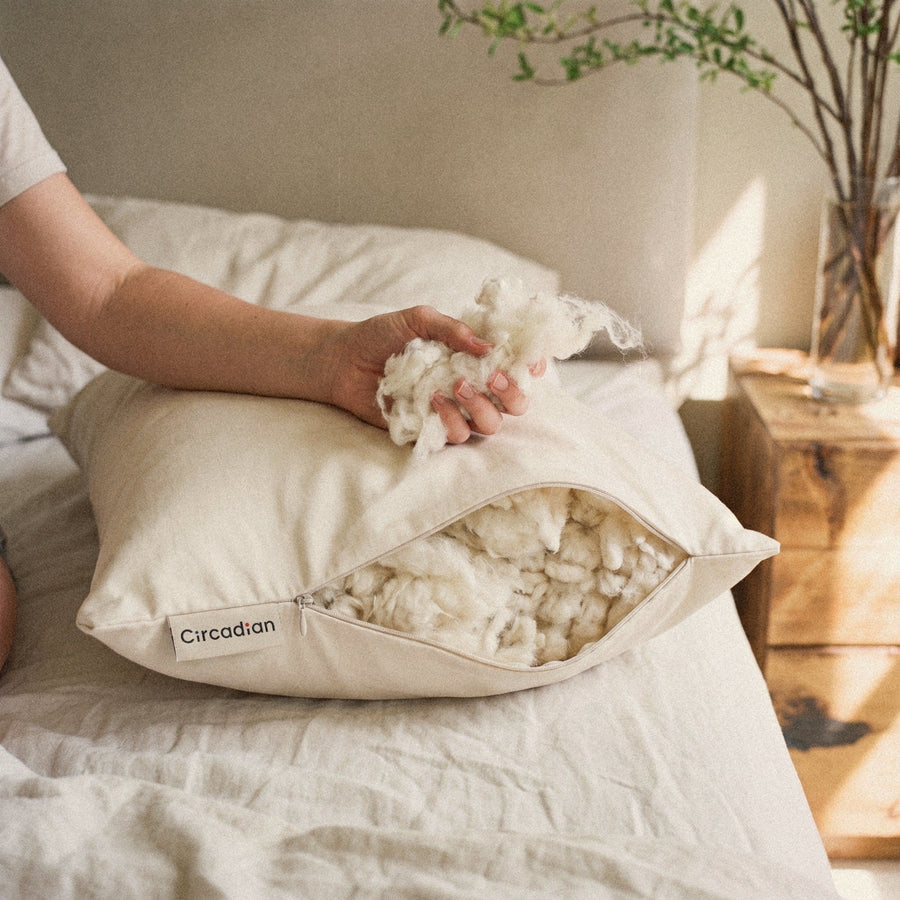
Every version comes in two lengths, 20 by 54 inches, the standard body pillow length, or 20 by 72 inches. Each one arrives full, with about 30% more than most people keep, opens through a zipper on the short end so you can shape it to your own body, and is handmade by the same New Jersey workshop team that makes the rest of our pillows. The 60-night sleep trial applies to all four. Pick the material, set the firmness, decide whether it belongs in your bed for the next several years.
Four materials, four reasons people reach for one.
Body pillows are usually sold in one synthetic material. We make four in natural fibers. Each one answers a different reason someone reaches for a body pillow, whether that's chemical sensitivity, a hot pregnancy, post-surgery recovery, or the simple comfort of something to hold while sleeping. Pick the one that matches your reason.
Which material is right for you
Wild-Harvested Kapok. The fiber grows inside seed pods on Ceiba pentandra trees in Indonesian rainforests. The pods ripen and fall on their own, and people gather them by hand, separate the fiber from the seeds, clean it and ship it. The fiber reaches the pillow without a chemical stage, so there is no finish on it to react to. It carries a natural waxy coating that sheds water, and dust mites need damp air to live. About 5.5 pounds at 54 inches and 9 at 72. Best for chemical sensitivities, feather allergies, or anyone who wants a plant-based alternative to down.
Tree-Tapped Slow-Pour Dunlop Latex. Shredded slow-pour Dunlop latex pieces, made from rubber tree sap (Hevea brasiliensis) tapped the way maple syrup is collected. Slow-pour means it is poured in small batches, so the block sets evenly from top to bottom. Air moves through it all night, so the surface never gets warm. The soft conforming feel that memory foam users miss, without the heat retention or chemical off-gassing. The latex inside is certified OEKO-TEX Standard 100 at Class 1, lab-tested for more than 1,000 harmful substances at the tier used for products made for babies. About 10 pounds at 54 inches and 14 at 72. Best for memory foam users moving away from synthetic foam. Not suitable if you have a latex allergy.
Organic Cotton. Denser than the wool or the kapok. Cotton fiber presses down slowly and evenly over months and years, not weeks, so the pillow holds its shape for years instead of going flat. The cotton and the cover are both certified organic, made in accordance with GOTS and third-party verified under license GOTS-10229. About 7 pounds at 54 inches and 10 at 72. Best if you want the same steady feel for years, with nothing to get used to.
Organic Wool. The wool keeps you at one temperature instead of running warm and then cold, because it moves up to 30 percent of its own weight in moisture off your skin and the heat goes with it. The air the wool holds stays too dry for dust mites to settle in, and that comes from the fiber rather than a treatment. The wool and the cotton cover are both certified organic, third-party verified. About 5.5 pounds at 54 inches and 9 at 72. Best for night sweats, hot pregnancy, and dust-mite allergies. The premium option in the line.
Two lengths, both in an organic cotton cover.
Every fill comes in two lengths. The 20 by 54 inch pillow is the standard body pillow length. It is long enough to hug, to tuck between your knees, or to support a pregnant belly while it wraps under the bent leg. The 20 by 72 inch pillow runs from your shoulder to past your feet, so it can sit alongside the whole length of you. It fits a king bed lengthwise.
Every version has an organic cotton cover. The organic cotton and organic wool versions are certified organic all the way through, made in accordance with the Global Organic Textile Standard (GOTS) under Oregon Tilth license GOTS-10229, and the license is renewed on an on-site audit every year.
It arrives full. You set the firmness.
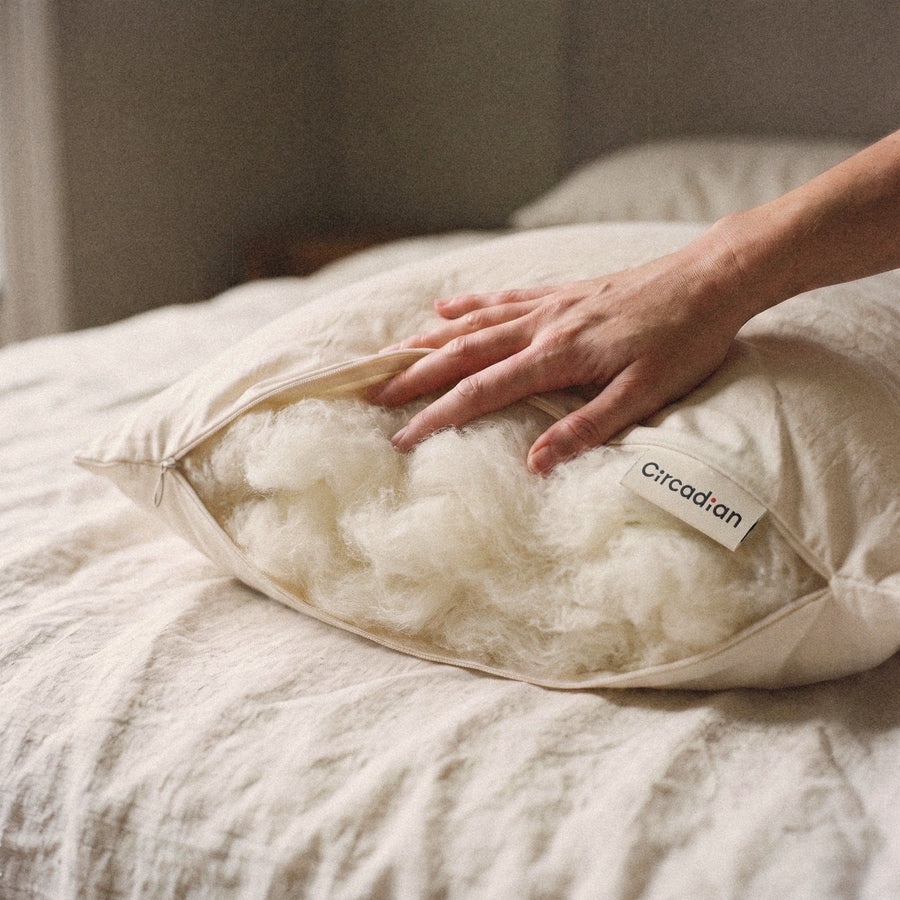
Every body pillow arrives full, with about 30% more than most people keep, so you can shape it to your own body. Open the zipper on the short end, take some out until the height and firmness feel right for your body, and seal it back up. You can put it back later from what you removed. This is the same adjustment system in our standard pillows, applied to a longer pillow that holds more.
Three steps to the right body pillow.
Pick the material that matches the reason.
What is inside matters more than the size or shape. Match it to why you're reaching for a body pillow in the first place. Chemical sensitivity points to kapok, a hot pregnancy to wool, and a move away from memory foam to latex. If you want the same feel for years, choose cotton. If you're not sure, the comparison block above is the fastest way to land on the right one.
Set the firmness through the zipper.
The pillow arrives full, with about 30% more than most people keep, so you can shape it to your own body. Unzip the short end, take some out by hand or by scoop, and seal it back up. Start with less than you think you want and add back if it sits too low. A body pillow holds more than a standard pillow, so the first session may take five to ten minutes.
Sleep on it through the trial period.
Body pillows take a full week before your body settles in. Lighter fibers like kapok feel familiar from night one. The 60-night trial covers you while you settle in. If something feels off by week two, set the height again or switch positions and try once more.
Sixty nights to decide, and free shipping.
You get 60 nights to sleep with this pillow, set it to your body, and decide if it belongs in your bed. If it doesn't, send it back for a full refund. We don't ask for an explanation.
Body pillows take longer than standard pillows to evaluate because the contact area is larger and your body settles in over the first week. We built the trial around that reality.
Shipping is free. Each one is made to order: it leaves the workshop in 7 to 12 business days, and delivery takes 2 to 5 more.
Filled by hand, so it stays even end to end.
Each body pillow is made up, weighed, and sewn by hand at our New Jersey workshop. Body pillows need careful distribution because the length creates more room for the fiber to settle unevenly. Working by hand is how we keep it balanced from end to end. Machine-made body pillows lump and bunch at one end within months, and a hand-balanced one keeps the same shape from top to bottom.
Questions people ask about body pillows.
What is a natural body pillow?
A natural body pillow uses plant or animal fibers inside instead of synthetic foam or polyester. Common natural materials include organic cotton, wool, kapok fiber, and slow-pour Dunlop latex. The Circadian Body Pillow is available in all four, each matched to different sleep needs and sensitivities.
Which Circadian body pillow is best for pregnancy?
Organic wool and wild-harvested kapok are the two most-recommended for pregnant sleepers. Wool wicks moisture during a hot pregnancy, and the air it holds stays too dry for dust mites, with no chemical treatment to off-gas. Kapok is soft, moldable, and free of every common chemical processing step, which matters during pregnancy when minimizing chemical exposure is a higher priority for many mothers.
Is a body pillow good for side sleepers with shoulder pain?
Yes. Side sleepers with shoulder pain benefit from placing a body pillow between the knees and along the front of the body, which keeps the hips and shoulders neutrally aligned through the night. Tree-tapped slow-pour Dunlop latex provides the most pressure relief of the four, with shredded latex pieces that conform to the body without flattening out. Organic cotton holds its shape and feels the same year after year.
What is the cooling body pillow for hot sleepers?
Organic wool keeps you cool, pulling sweat off your skin and into the fiber so the heat leaves with it, even during night sweats. Tree-tapped slow-pour Dunlop latex lets air move through it, so heat leaves instead of building up the way it does in memory foam. Both meaningfully outperform foam or polyester body pillows for hot sleepers.
Can you adjust the firmness of the Circadian body pillow?
Yes. Every version arrives full, with about 30% more than most people keep, so you can shape it to your own body. Open the zipper on the short end and take some out until the height and firmness feel right for your body. You can put it back later from what you removed. It works the same way across all four.
How long is the Circadian body pillow?
It comes in two lengths in all four fills. The 20 by 54 inch pillow is the standard body pillow length, long enough to hug and to tuck between your knees. The 20 by 72 inch pillow runs from your shoulder to past your feet and fits a king bed lengthwise.
Is the body pillow GOTS Certified Organic?
The organic cotton and organic wool versions are certified organic all the way through, cover included, made in accordance with the Global Organic Textile Standard (GOTS) under Oregon Tilth license GOTS-10229, and the license is renewed on an on-site audit every year. The kapok and latex versions use the same organic cotton cover. The kapok is wild-harvested, never bleached or chemically treated, and carries no organic certification. The latex is certified to OEKO-TEX Standard 100 at Class 1. So we do not call those two versions certified organic.
Is the body pillow safe for chemical sensitivities?
Wild-harvested kapok is the strongest option for chemical sensitivities because the fiber moves from the tropical tree pod into the pillow without any chemical processing step. The organic cotton and organic wool versions are also strong choices because both are certified organic inside and out. Avoid the tree-tapped latex if you have a latex allergy.
Is there a right height for a pillow?
Researchers have gone looking for the right pillow height and not found one. A 2021 review in Healthcare pulled together the studies on how height gets chosen and reported no optimum for back or side sleeping. It also found that the height which works for a person does not track the measurements of their head or their neck. So there is no number anyone can calculate for you, and a sealed pillow that arrives at one height has guessed.
Open the zipper. Take some out, sleep on it, put some back. Your neck answers the question that the measuring tape cannot. Ergonomic consideration in pillow height determinants and evaluation, Healthcare (Basel), 2021.
How much does the Circadian body pillow weigh?
Weight depends on the fill and the length, and these are finished weights with the cover on. At 54 inches, wild-harvested kapok and organic wool are both about 5.5 pounds, organic cotton about 7 and tree-tapped latex about 10. At 72 inches, kapok and wool are about 9 pounds, cotton about 10 and latex about 14, the heaviest of the four. A lighter pillow is easier to pull around the bed at night, and a heavier one stays where you put it when you hug it.
Not sure which case length you need? How do you choose a body pillow and its case walks through measuring seam to seam, the 18 inch gap between the two common lengths, and what to check on a case beyond fit.