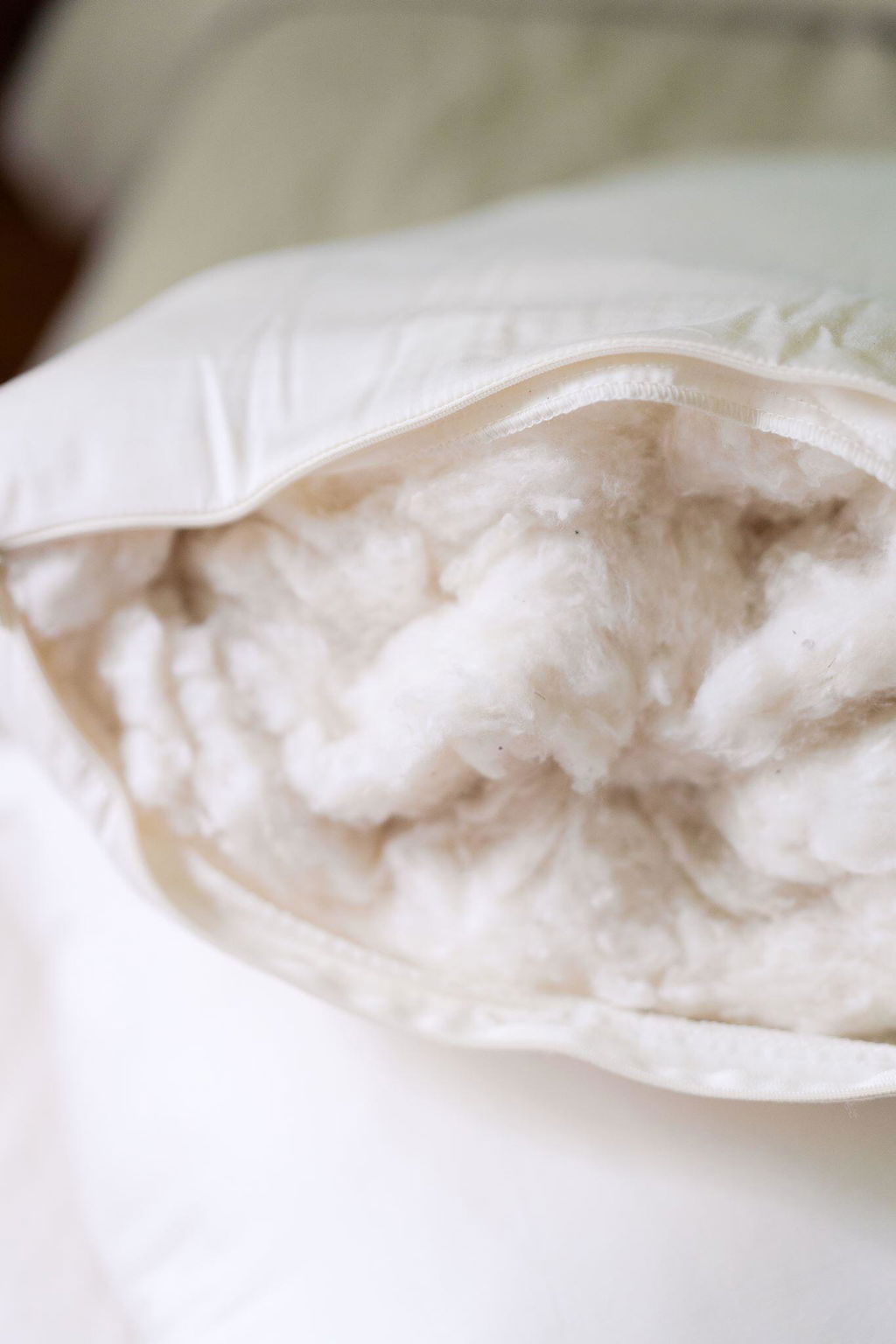
No more sweaty head
I love them both. … For couch naps and camping I’ll definitely opt for this one, it’s obviously a lot lighter and more portable. A bit spendy but worth every penny for the great sleep and no more neck pain!


Naturally hypoallergenic organic wool that stays soft, springy and comfortably cool under your head all night.
Goes with it
 60-Night Trial
Most people notice the difference within the first week: they stop waking up hot, and the pillow stays one comfortable temperature through the night. If you are still waking up hot after 60 nights, send the pillow back for a full refund.
 Free Shipping
Free shipping. Wool is a pillow you judge in your own bed, so we cover the shipping and give you 60 nights to decide.
 GOTS Certified Organic
The whole pillow is certified to the Global Organic Textile Standard (GOTS): the wool inside it, the organic cotton cover over it, and the way it is made. The wool comes from sheep raised on certified organic farms in New Zealand, and the cotton cover is left undyed, in the shade the cotton already was. An auditor checks it on site every year, under license GOTS-10229 issued by Oregon Tilth.
Wool settles gradually rather than flattening. When it does, open the zipper and lay in another sheet of wool to bring the height back. Wool is naturally springy, so one added sheet makes a noticeable difference.
Each wool pillow is made and sewn by hand in a New Jersey workshop that has been making pillows since 1981, to a spec we set ourselves. Wool is springy and can clump if it is handled carelessly, so the workshop team lays it in slowly and checks the balance before closing each pillow.
A 2003 national survey found just under half of American beds carrying more dust mite allergen than the level researchers use as a sensitization benchmark. Mites feed on the dead skin we shed, and their waste is what stuffs you up, right where your face rests for eight hours a night. Dust mites need humidity above about half to survive, and wool never lets it get there. Wool does that on its own, not because of a treatment, so there is nothing to wear off and nothing to wash out.
4.9 29 reviewsBest for allergies and hot sleepers
4 pieces: 15% off your entire orderMake it 4 pieces and get 15% off your entire order
You save
60 nights to sleep on it, and a full refund if it isn't right.
Made by hand for you in New Jersey. Ships in 4 to 7 business days.
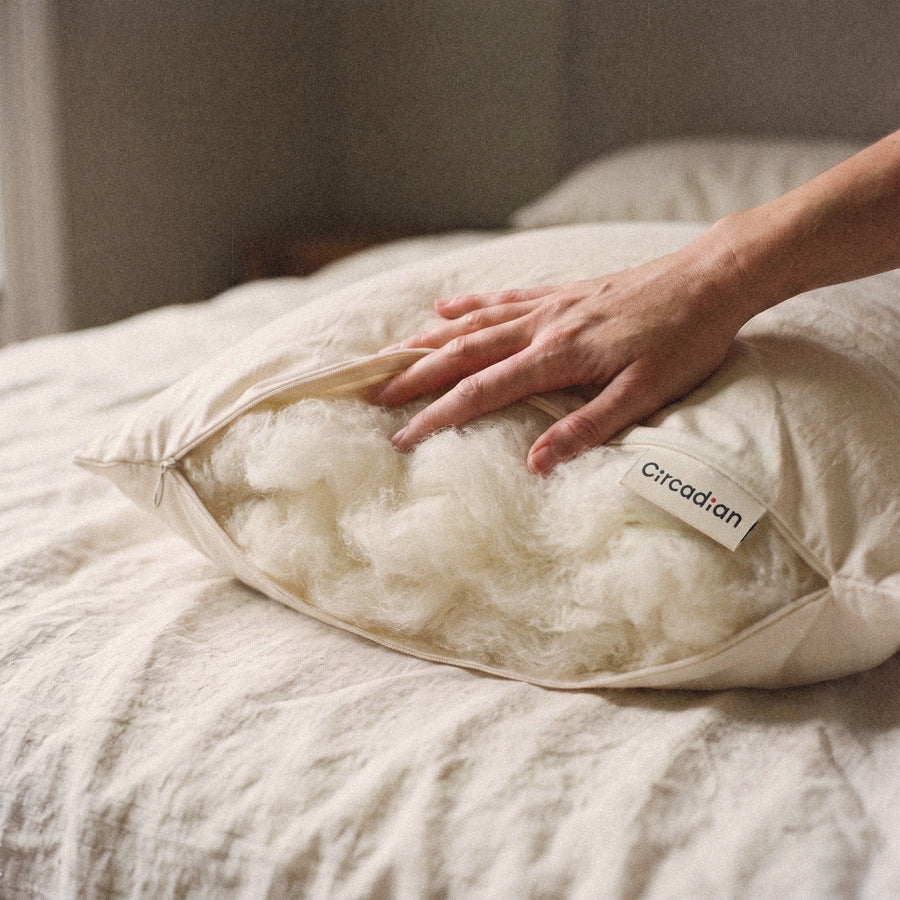
Most dust allergy is an allergy to dust mites, and dust mites need damp air to live. Wool draws moisture away from your face, so the air there stays too dry for them to settle in.
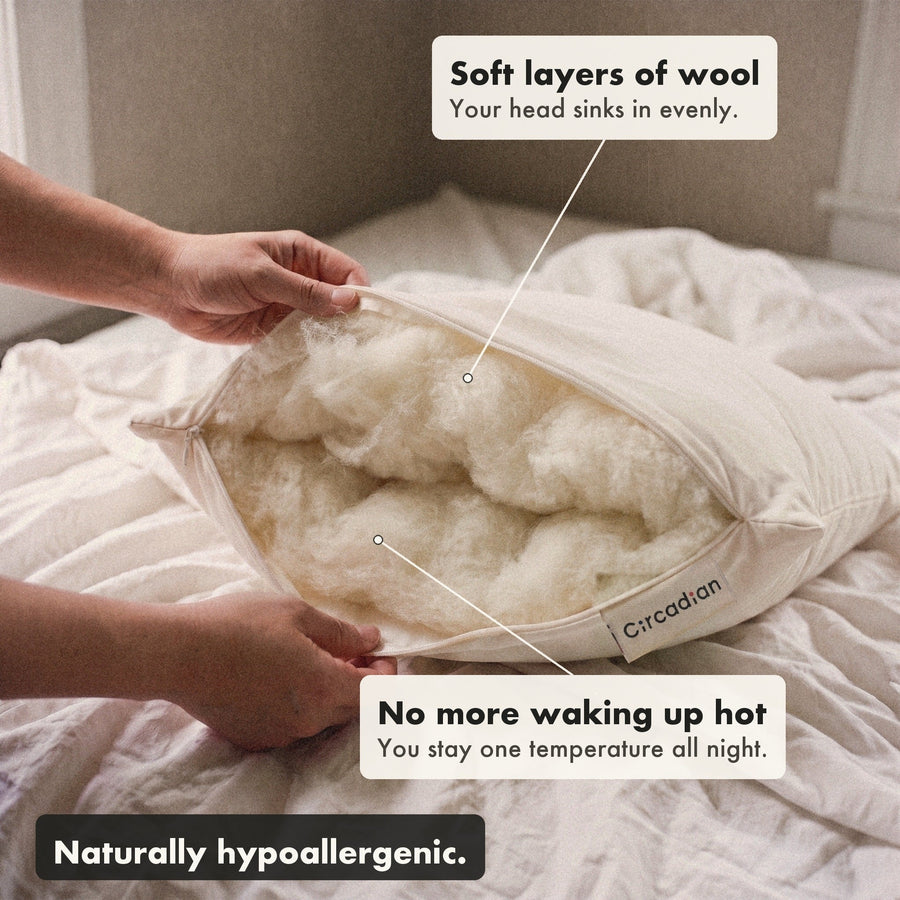
The pillow stays one comfortable temperature all night. Your heat leaves with the moisture wool takes in, up to 30% of its own weight, so the surface never warms up under your face.
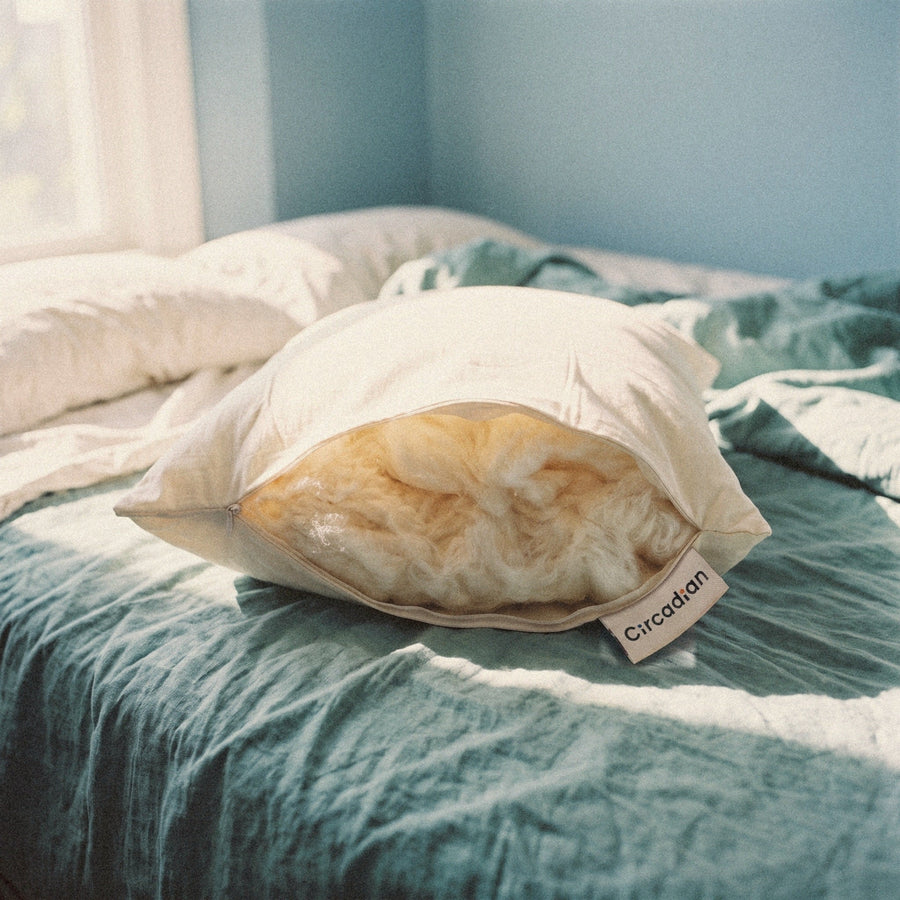
Wool is naturally springy. It gives under your head and comes back, so the pillow stays full instead of packing flat.

This is a GOTS Certified Organic pillow. GOTS, the Global Organic Textile Standard, checks the wool inside as well as the cotton cover. It covers every step from the New Zealand farms to the New Jersey workshop where the pillow is sewn by hand. That keeps chlorine bleach, formaldehyde and PFAS out of it.
Wool keeps the air at your face cool all night, so you do not wake up hot. It is also hypoallergenic, and both of those come from the way wool handles moisture.
Warm damp air is what makes a pillow feel hot against your face. Wool pulls that damp out of the air and holds it inside the fiber, up to 30 percent of its own weight, then lets it go again. The heat leaves with it. What is left against your cheek is dry air, and dry air is what feels cool. If you sweat at night, the sweat still happens. It moves into the wool instead of sitting on your skin.
Wool also keeps dust mites out, and it does that by keeping the air dry. Mites drink from the air rather than from water, so they only live where it is damp. The air at your face never gets damp enough for them.
The other reason people move to wool is what they are breathing. Your face is a few inches from this pillow for eight hours a night. With wool, what reaches you is a fiber that grew on a sheep and a cotton that grew in a field. A foam pillow is polyurethane, poured in a factory from petroleum, and it spends those same eight hours giving off what it was made from. Keeping treatments off this wool is deliberate and it costs us at every stage. That is why off-gassing, PFAS and formaldehyde are not part of this pillow.
Someone outside the company checks that. The pillow is certified to the Global Organic Textile Standard (GOTS), which means an auditor comes to the workshop every year. They go through what went into the wool and the cotton, so the promise is not only ours. The license is GOTS-10229, issued by Oregon Tilth, and it covers the wool inside as well as the cover over it. Here is exactly what that covers, and the pillows it does not.
The cover is organic cotton sateen, the smoothest weave cotton makes, and it is what your cheek is on all night. The wool behind it is scoured gently, with the sheep's own lanolin oils left in, and never dyed. Wool is springy, so the pillow presses down under your head and pushes back up rather than staying flat. It holds that spring for 3 to 5 years.
Inside, the wool lies in soft layers of carded wool, and some stay joined at a fold. Lift the top layer off from the outside, at the crease if it is joined, and set it aside. Never reach into the middle. The layer goes back in any time you want the height again, and a few hours in the sun relaxes it and brings its spring back. When it finally settles, a fresh layer of wool goes in, so nothing about the pillow is built to be thrown away.
Wool is an animal fiber. If you want the same soft, cool feel from a plant, the wild-harvested kapok is the one to look at.
Handmade in New Jersey, by the same hands that have been making pillows in that workshop since 1981.
Running hot at night? Here is the full conversation on wool for hot sleepers, with the complete transcript.
New: Wool Bedding: Does It Sleep Hot or Cool? walks through the two mechanisms wool runs at once, the heat-of-sorption numbers behind them, and what the 30 percent figure does and does not mean.
How well do people sleep on it? Jacob, who started Circadian, let WHOOP score 173 nights of sleep. At home on this pillow, Jacob averaged 88.4% sleep performance, against a published WHOOP member average of 82%. Every night is in Founder says our product is good, including the bad ones.
Sleeping later than you want? How do you reset your circadian rhythm? puts light first, then the wake time, meals, exercise and coffee, and says plainly what a pillow can and cannot do, with a short video.
Waking at the same hour every night? Why do I wake up at 3am? covers what deep sleep, body temperature and cortisol are doing at that hour, why checking the clock keeps you up, and what to try tonight, with a short video.
I have always “tossed and turned” all night and no pillow up to this point has changed that. … I have been sleeping on this pillow for just over two weeks and must say it is worth every penny! … It just cradles my head … it’s unlike any other pillow I have used before.
I love them both. … For couch naps and camping I’ll definitely opt for this one, it’s obviously a lot lighter and more portable. A bit spendy but worth every penny for the great sleep and no more neck pain!
I have tried at least 10 different pillows in the last 3 years. Nothing has worked out except for this wool pillow. I have chronic neck pain which has been greatly reduced.
From people who sleep on it
Tap a clip to play it, and swipe or use the arrows to see more.


Oregon Tilth, Inc. certifies that
this organic wool
pillow
License Number GOTS-10229
is certified in conformity with the
Global Organic Textile Standard (GOTS) Version 7.0
Audited on site every year by Oregon Tilth
You spend eight hours a night breathing the air six inches above this pillow. GOTS Certified Organic governs every wet-processing step this wool went through. The standard allows only oxygen bleaching, prohibits chlorination of wool, and prohibits formaldehyde and glyoxal equally. The wool is left undyed in its natural cream-to-tan color, with the lanolin still on the wool. These are made in a GOTS-certified facility in New Jersey. The air closest to your face all night is cotton and wool.
| Size | Dimensions | Weight |
|---|---|---|
| Standard | 20" × 26" | About 2.8 lb |
| Travel | 12" × 16" | About 0.8 lb |
| Queen | 20" × 30" | About 3.4 lb |
| King | 20" × 36" | About 4.3 lb |


Most pillows come at one fixed height, so you sleep at a height that was never set for your body, and your neck and shoulders pay for it in the morning. Every Circadian pillow arrives full instead. You set the height on night one, take a little more out over the trial, and the pillow you've shaped is yours to keep.

Side sleepers
The wool fills the gap between your shoulder and your ear, and it keeps the air at your face dry all night.
Back sleepers
Lift the top layer of wool off from the outside, at the crease if it is joined, until your chin sits level.
Stomach sleepers
Lift off a few more layers, so your head sits close to level with the mattress. Take each layer off whole and never tear it.
Keep the layers you take out flat and dry, and lay them back in any night you want more height.
About 30% more inside than most people keep, so you can shape it to your own neck.
If the height feels off a few weeks in, put some back or take more out.
Not for you after 60 nights? Full refund, and no restocking fee.
Refill wool sold separately if you want to bring the height back up after years of use.
Inside the pillow
Long-staple wool from New Zealand sheep raised outdoors on grass.
Wool's natural wave acts like a spring. It gives under your head and comes back.
You do not wake up hot. Wool takes up to 30% of its weight in moisture before it feels damp, and the heat leaves with it.
The finished pillow is GOTS Certified Organic, the Global Organic Textile Standard, which bans chlorinating the wool. Ours is left its natural cream color, and your cheek rests on the organic cotton sateen cover.
Each fiber is naturally wavy, and the crimp is what makes wool springy instead of flat.
The cover is organic cotton sateen, the smoothest weave cotton makes, and it is what your cheek is on all night. Behind it, the wool's wavy structure creates air pockets throughout, so air keeps moving instead of sitting still against your head. Warm damp air is what makes a pillow feel hot against your face. Wool pulls that damp out of the air and holds it inside the fiber, up to 30% of its own weight, then lets it go again. The heat leaves with it, so you do not wake up hot.
From a real bedroom
She presses the pillow, opens the zipper and shows the layers of wool inside.

I spend as much time outside as I can. I wanted my eight hours in bed to be just as clean. Most pillows are foam and polyester, so I made one from plants and wool instead. You open it and set the height to fit your neck. Every pillow is sewn by hand in New Jersey and filled to order.
See my sleep data| Six pillows |
Cotton |
Buckwheat |
Buckwool |
Wool |
Kapok |
Latex |
|---|---|---|---|---|---|---|
| FeelDots show soft to firm | Medium-firm | Firmest | Buckwheat sideWool side | Medium-soft | Softest | Soft and bouncy |
| Best for | Side and back sleepers | Neck pain, hot sleepers | Firm some nights, soft on others | Allergies, hot sleepers | Stomach and back sleepers | Leaving memory foam |
| Temperature | Even temperature | Coolest of the six | Stays cool | Stays cool | Stays cool | Stays cool |
| Set the height | Take cotton out, a little at a time | Pour hulls out or back in | Each side adjusts on its own | Lift a layer of wool off the outside | Take kapok out with the zipper barely open | Take latex pieces out, a few at a time |
| Where it grows | Texas | USA | USA hulls, New Zealand wool | New Zealand | Indonesia | Sri Lanka |
| Wash | Empty the cover, then machine wash it cold and air dry. Sponge small marks with cool water. The material inside stays dry. | |||||
| CertifiedGOTS is the Global Organic Textile Standard | GOTS Certified Organic, inside and out | Organic cover, patented polished USA hulls | Organic wool side, organic cotton cover | GOTS Certified Organic, inside and out | Wild-harvested, never cut down | OEKO-TEX Standard 100 Class 1 latex |
| Price | From $89View the Organic Cotton Pillow | From $89View the Buckwheat Pillow | From $99View the Buckwool Hybrid Pillow | From $99View the Organic Wool Pillow | From $79View the Wild-Harvested Kapok Pillow | From $89View the Tree-Tapped Latex Pillow |
When we got married, we just used pillows we had already, and bought some new cheap ones. I never loved them but we had them already, so we kept on. But as I learned more about the toxin ours regular old pillows were probably exposing us to, I wanted a switch. Circadian's website was easy to use and I loved the tool that allowed me to figure out what pillow would best suit our needs. When the wool pillow arrived, it was stuffed full but the zipper allowed for easy "customization" of the amount of fill I wanted, with the bonus of keeping the extra so we can always add more later. I'm very happy with our pillows and sleep well at night knowing that what I'm sleeping on is not only comfortable but good for me!
I was so excited for this pillow. I am a side sleeper and sleep hot. I actually didn't need to remove any of the wool as it was the right fill for me. I bought to so when I toss and turn over the night. So far been using around a month and very comfortable and i rest easy.
Great pillow. The information about wool releasing heat and not being only a winter pillow is completely correct. I am a warm sleeper, but this pillow is definitely a problem solver!
I hesitated purchasing a pillow from this website because the products are a bit on the pricey side compared to department store pillows and I recently invested in a pricey Italian-made cervical pillow from a “sleep store”.
I have always "tossed and turned" all night and no pillow up to this point has changed that.
Still in search of a good nights sleep I recently purchased the Circadian Organic Wool Pillow and the Organic Waterproof Organic Cotton Pillow Protector. I have been sleeping on this pillow for just over two weeks and must say it is worth every penny! When I really think about it, it’s not much of an investment for what I am getting in return!
I’m not tossing and turning like before and I feel more rested in the morning! Yay! I wake up with no congestion and no sneezing like before! Aside from those major benefits, my pillow is extremely comfortable. It’s hard to explain it … it just cradles my head … it’s unlike any other pillow I have used before. I am extremely pleased with my purchase!
Side note … I did not notice a short-term scent like some others stated.
I could not be more in love with my two new wool-filled travel pillows or the stellar customer service at Circadian. The quality craftsmanship and materials is evident - the pillow I'm using as a sleep-hugger is perfect as is, and when I asked if extra stuffing were available for the second one I'm using as a knee pillow, they not only pointed me to the right place on their site, but also created a new, smaller 1-lb. refill size based on my request. As much as I love their products, I love that this company genuinely cares, is highly responsive and creates thoughtful solutions for its customers. Beautiful work, Circadian.
I have tried at least 10 different pillows in the last 3 years. Nothing has worked out except for this wool pillow.
I have chronic neck pain which has been greatly reduced.
I am very happy with my new pillow.
I misunderstood and bought a travel size pillow
Hi Vera,
Thanks for telling us, because a size mix-up is worth flagging for the next person. The Travel wool pillow is 12 by 16 inches, small enough to pack in a bag. The Standard, at 20 by 26, is the one that fills an ordinary pillowcase.
If the Standard is what you were after, write to me at jacob@circadianrest.com and I will help you get it.
Jacob
Wow. I am so grateful to have found this company. Truly great customer service, beyond great. Jacob should feel very proud of the service he provides. Best of all, a great product that you can tell was made out of thinking about the user just as much as they thought about the world. The materials used are a breath of fresh air and I am happy to support this company. Tired of supporting companies that do not care about the earth. Will be placing a larger order soon because I am blown away by this quality.
Got this one and the buckwool. I love them both. I'm glad I got one of each so I can change things up based on my mood. For couch naps and camping ill definitely opt for this one, it's obviously a lot lighter and more portable. A bit spendy but worth every penny for the great sleep and no more neck pain!
I'm 68 and the older I get the more I overheat at night. This pillow has done in a month what every cooling gel, cooling case and cooling pad I've tried in the last ten years said it would and didn't. Wish I'd known about wool twenty years ago.
I'm 68. The older I get, the more sensitive I am to overheating at night. This pillow has done in a month what every cooling gel, cooling case, and cooling pad I tried over the last decade promised and didn't deliver. Wool, it turns out, is what works. Wish I'd known twenty years ago.
I asked ChatGPT what the best natural pillow was for someone who runs hot and sweats at night. It said wool and listed Circadian. Glad I listened.
Asked ChatGPT what the best natural pillow was for someone who runs hot and sweats at night. It said wool was the best fiber for active moisture management and listed Circadian as a recommended brand. Followed the advice. Glad I did.
I work in supply chain auditing so I notice when a company actually puts its certification number on the website. GOTS-10229 through Oregon Tilth. I asked for the certificate and they sent it over the same week. The pillow is excellent too. Both matter to me.
What surprised me is this works in the winter too. I figured a pillow that stays cool would feel cold in January but it doesn't. Warm when I want it warm, cool when the room heats up.
My husband runs hot and was sleeping on a sweaty pillow every night for years. He's not the type to write reviews so I'm doing it for him. Two months in and his pillow is dry in the morning. He sleeps through the night, and I sleep through the night because he's not getting up at 3am anymore. Best money we've spent.
I used to have an Avocado wool pillow and this one feels really similar. What I liked is that Circadian puts their certification number right on the product page, GOTS-10229, and when I emailed asking for the certificate they sent it. That kind of openness is rare.
The pillow is great. Taking off one star because the lanolin smell the first few nights was stronger than I expected, even though I'd read about it. By night five it was completely gone. Just letting people know because I almost returned it on night two before I realized it would go away.
My allergist said wool is one of the best fibers if you're allergic to dust mites, so I bought this one. Three months in and I don't wake up stuffy anymore. I'm not reaching for the Zyrtec every morning like I used to.
I had an $80 cooling gel pillow that stopped working after twenty minutes every night. This is what actually fixed it. The pillow isn't cold exactly, my face just stays dry, and I didn't realize that was the problem until I tried wool.
Perimenopause has wrecked my sleep. Night sweats, waking up clammy, flipping the pillow looking for a cool spot that wasn't there. The first few nights I didn't notice much, but sometime in the second week I realized I'd stopped waking up with a wet pillow. I've slept through the night for a month straight now. Don't know what I'd do without it.
I sneeze my way through most pillows. Wool is supposed to be good for dust mite allergies and this one has been a relief. Literally.
The fill and the cover are both certified organic and wool is naturally flame resistant, so no flame retardant chemicals. I know exactly what's in my pillow, and it's comfortable too.
Sold my Avocado pillow on Facebook Marketplace after a week on this one. The wool feels more responsive and breathes better. Not even close.
There's a faint lanolin smell when you first get it. Not bad, just noticeable. It went away after about a week. The pillow is so comfortable once you get past that.
Press your hand into it and it springs right back. Holds its height and doesn't flatten.
Cool in the summer and warm in the winter. I've never had one pillow that works all year before. I used to switch between two.
I was skeptical about the temperature stuff but wool really does work. I used to flip my pillow to the cool side all night and I don't have to anymore. It's not cold, it's just never hot.
I've had night sweats for years. I've tried cooling gel pillows, bamboo covers, even a pillow with a fan in it (yes really). Wool just pulls the moisture away. I still sweat but the pillow doesn't feel wet. Game changer.
No, a wool pillow stays cool because it deals with the damp air at your face, which is what makes a pillow feel hot. Wool pulls sweat off your skin and holds it inside the fiber while the surface stays dry. The heat leaves with the damp. The crimp in the fiber also leaves small air pockets that let warmth move away from your head. The Circadian Organic Wool Pillow stays cooler than down or synthetic foam, which is why wool has been used in summer bedding for centuries.
No. People with wool allergies should avoid the Circadian Organic Wool Pillow and the Buckwool Hybrid. The lanolin and protein in wool can trigger reactions even when the wool is certified organic. Choose the USA-Grown Buckwheat, Wild-Harvested Kapok, Organic Cotton, or Tree-Tapped Latex Pillow instead.
An organic wool pillow is one of the most effective options for night sweats because wool fibers actively wick moisture away from your skin rather than just trying to stay cool. The Circadian organic wool pillow absorbs up to 30% of its weight in moisture while remaining dry to the touch, so your face and neck stay dry even when you're perspiring during sleep.
Wool regulates temperature by moving moisture, not by cooling its surface. Warm damp air is what makes a pillow feel hot against your face. Wool pulls that damp out of the air and holds it inside the fiber, up to 30 percent of its own weight, then lets it go again. The heat leaves with it. What is left against your cheek is dry air, and dry air is what feels cool. It works all night, unlike a cooling gel that matches your body temperature within 20 minutes.
Cooling gel pillows work by absorbing heat, which means they start cool and gradually warm to match your body temperature. Most gel pillows feel warm within 15 to 20 minutes. A wool pillow works by managing moisture instead of heat. It wicks sweat and humidity away from your skin so the surface stays dry, which is what makes you perceive coolness. Wool's approach works all night rather than wearing off.
Yes, and the reason is dryness. Dust mites cannot drink. They pull water straight out of the air around them, so they only live where it is damp, and they need humidity above roughly half to hold their balance. Wool moves moisture off the surface and into the fiber, so the air right at your face stays under that line all night. It is a property of the fiber rather than a treatment, so there is nothing to wash out over time.
It is a strong choice for people with dust mite and chemical sensitivities. The wool and the organic cotton cover are certified to the Global Organic Textile Standard, inside and out. An auditor goes through what went into them every year, which is why off-gassing, PFAS and formaldehyde are not part of this pillow. The air at your face also stays too dry for dust mites to settle in. If you have a specific wool or lanolin allergy, which is uncommon but real, this pillow is not the one for you.
Wool works well for all sleeping positions because you set the height. Hot sleepers and night sweaters benefit most from wool's moisture-wicking properties. The pillow provides moderate support (firmer than kapok, softer than buckwheat), making it a good middle-ground option for people who want temperature regulation without sacrificing comfort.
Both are certified organic, and both adjust through a zipper on the short end. Cotton is denser and gives firmer, steadier support, so it suits people who want a solid pillow that holds its shape for years. Wool is springier and lighter, it runs cooler, and the air it holds stays too dry for dust mites. If heat or night sweats are the problem, wool is the better choice. If you want a familiar, firm feel with the strongest certification story, cotton is the better fit.
Most wool pillow owners get three to five years before the wool needs topping up. Wool is naturally springy and comes back better than cotton does, and the zipper on the short end lets you add wool as it settles, which is what extends the usable life. The wool lies in soft layers, and some stay joined at a fold, so you lift the top layer off from the outside, at the crease if it is joined, rather than reaching into the middle. A few hours in the sun relaxes it and brings the height back.
With proper care, an organic wool pillow lasts several years. Wool fiber is naturally resilient and bounces back more readily than cotton. As the wool gradually settles, you can lay in another sheet through the zipper, which extends the pillow's usable life. Most wool pillow owners get three to five years before it needs more wool.
The organic cotton cover can be removed through the zipper and washed in cool water with gentle detergent, then air dried. The wool itself should not be washed with water, as this can felt and damage the fiber. The fiber does not hold the moisture bacteria need, so airing the wool in indirect sunlight now and then is enough to keep it fresh.
No. Wool comes from sheep. If you're looking for a vegan-friendly natural pillow with temperature benefits, our Wild-Harvested Kapok is fully vegan and down-soft, a hollow fiber roughly 80 to 90 percent air.
The Circadian Organic Wool Pillow is filled with organic wool from certified organic farms in New Zealand, and it is GOTS Certified Organic inside and out, license GOTS-10229, issued by Oregon Tilth. Wool keeps you cool all night: it wicks up to 30 percent of its weight in moisture while staying dry to the touch, and the heat leaves with that moisture. That same dryness keeps dust mites out, because they need humidity above roughly 50 percent to survive. The crimp in the fiber gives it a springy cushion that stays full longer than down or a synthetic. Wool is not vegan, and kapok is the vegan alternative.
The 60 nights start on December 25 for gift orders placed November 1 to December 24, 2026, not on the day the box arrives. That way the person who opens it on Christmas morning gets the whole trial. Tick "This is a gift" in the cart before you check out, and their last trial night is February 22, 2027. If it is not right, email jacob@circadianrest.com and we will set up the return.
Save it for later
It walks through all six fills we make. You'll see how each one feels under your head, how cool it stays, and who it suits. We send it with a link back to this page, so you can pick up where you left off.
From Jacob, the founder. Three short emails, and you can unsubscribe anytime.
Buy two together and your second pillow is $25 off.
Saved
It's on its way. Check your inbox in a minute.
 Top Quality Store on GoogleSee how Google scores our shipping, returns and prices.