
The cheapest thing on your bed decides how long the rest of it lasts.
A pillow does not usually wear out. It gets dirty. This is the layer that stops that happening, and it is the reason a good pillow reaches year five looking like year one.
The list most protector makers hope you never read. None of it is in a Circadian protector.
Waterproof usually means plastic against your face. Not here.
Most waterproof protectors are a sheet of vinyl or polyurethane with a thin fabric glued to it, which is why they crinkle, trap heat and feel like sleeping on a raincoat. This one is built the other way round.
- Face
- Organic cotton
- Barrier
- A microporous membrane, so air and vapour pass and water does not
- Also carries
- GreenGuard Gold, the tier written for schools and childcare
- Sizes
- Standard, Queen and King
- Made
- Nobody made this one until you ordered it. Cut, filled and closed by hand in New Jersey
- Wash it
- Hot, about once a month, then straight back on

Organic cotton on the side that matters.
The face against your cheek is Organic cotton, so the surface you breathe against for eight hours is fabric rather than film. The barrier sits behind it, out of contact.

A bio-based barrier, and no crinkle.
Behind the cotton is a thin bio-based TPU membrane. It blocks liquid, dust mites and bed bugs while still letting water vapour through, which is why it does not trap heat the way a vinyl backing does. It also carries GreenGuard Gold, which tests for chemical emissions into the air of the room.
Which pillow is right for you?
Six fills. All adjustable. All handmade in New Jersey.
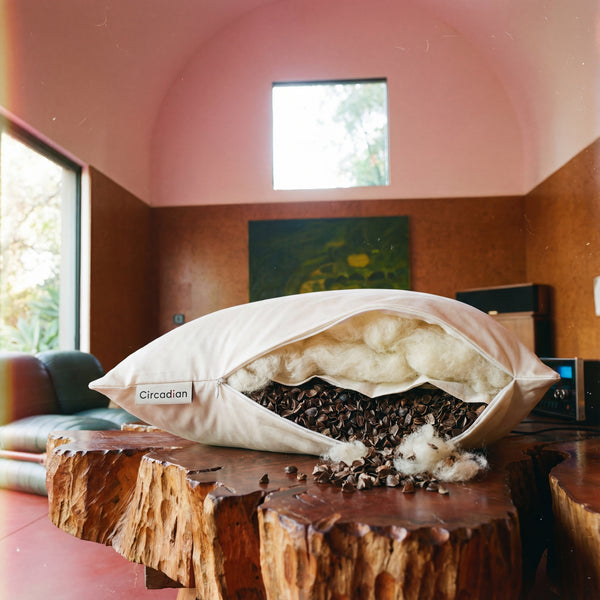
Buckwool Hybrid
From $99Best for: neck pain, combination sleepers.
Two pillows in one. Firm buckwheat and soft wool, each side adjustable on its own.
View pillow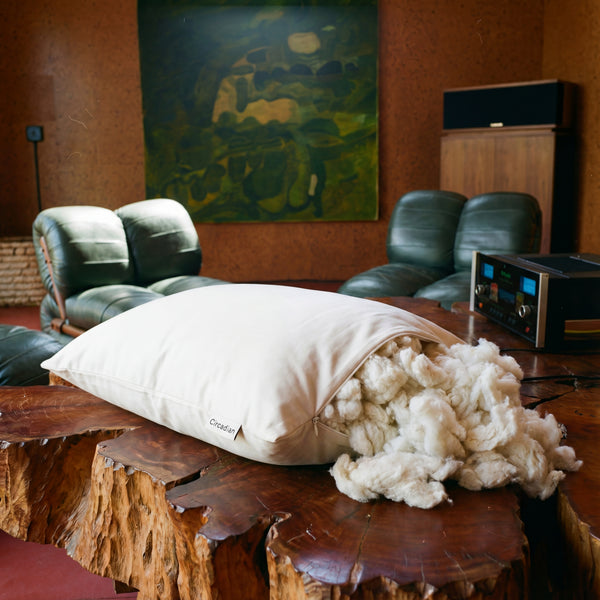
Organic Cotton
From $89Best for: back sleepers, GOTS-certified organic everything.
Our most tightly packed fiber fill. Holds its shape for years, GOTS-certified organic end to end.
View pillow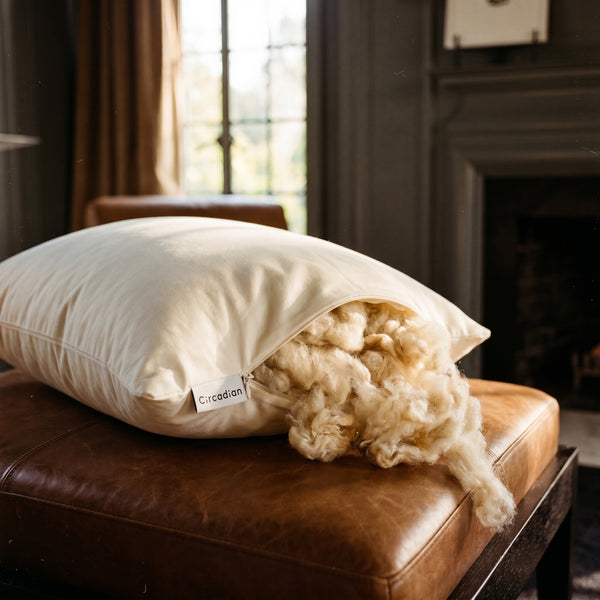
Organic Wool
From $99Best for: hot sleepers, dust allergies.
Wicks up to 30% of its weight in moisture. Naturally regulates temperature and holds the air too dry for dust mites.
View pillow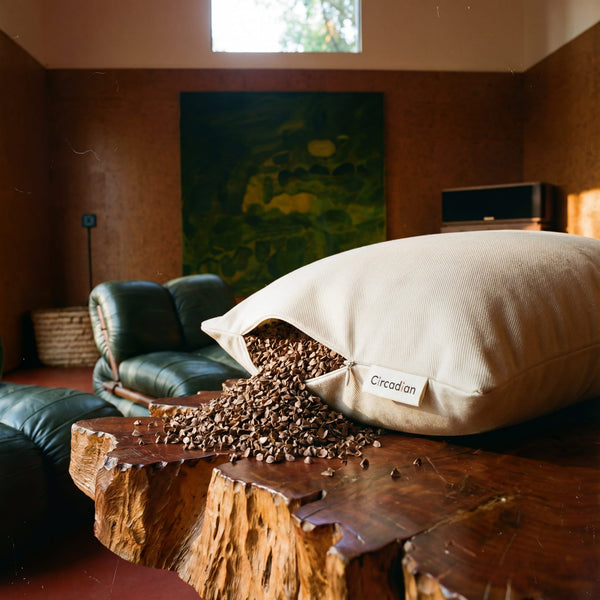
Buckwheat
From $89Best for: neck pain, side sleepers.
Hulls flex and lock to your neck shape. Stays cool all night, and most people get three to five years from a hull load before refreshing.
View pillow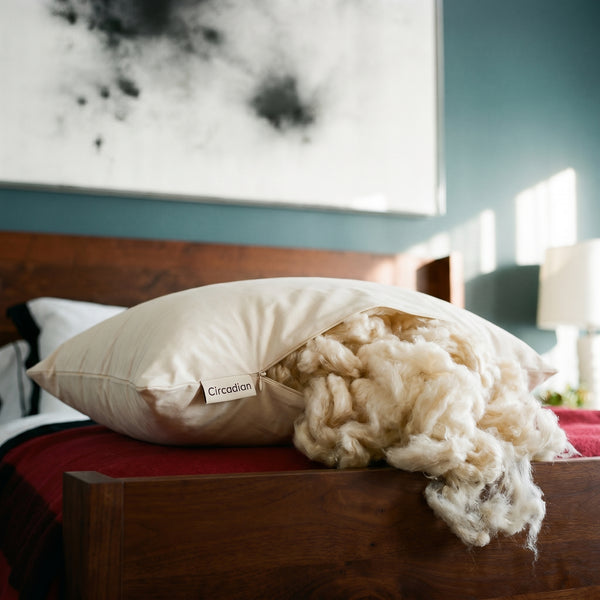
Wild-Harvested Kapok
From $79Best for: chemical sensitivities, vegans, stomach sleepers.
Plant-based and down-like. Hollow fibers are 80 to 90% air, so it stays cool and fluffs up like down.
View pillow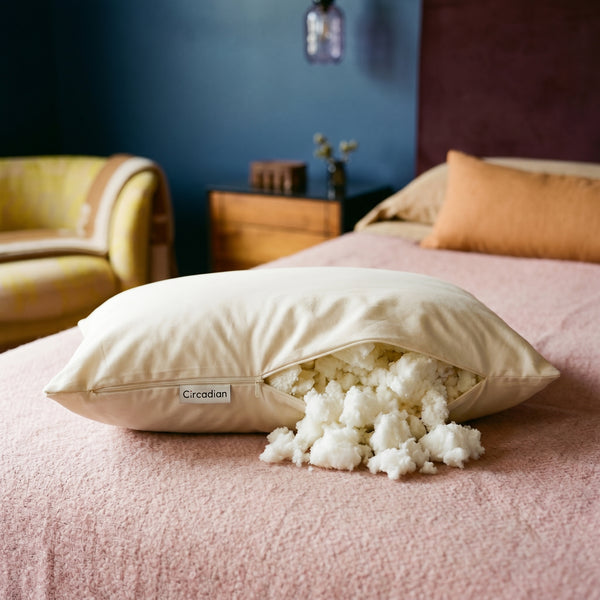
Tree-Tapped Latex
From $89Best for: people leaving memory foam.
Slow-pour Dunlop with an open-cell structure that breathes. Light, bouncy, and responsive, it springs back instead of sinking.
View pillowThe ones people filmed themselves.
Not our shoot. Tap any one to go to the post it came from.
The cheapest thing on your bed is the one protecting the rest.
A pillow rarely wears out. It gets dirty and then it gets replaced, which is the whole reason this layer exists.

A face that breathes
Most waterproof protectors are a sheet of vinyl with a thin fabric glued to it, so the breathable pillow you paid for ends up sealed inside plastic. The face of this one is organic cotton, so it stays soft against your skin.
A membrane, not a sheet
The barrier underneath is microporous. Spills and sweat cannot get through it, and air and water vapour can, which is why it never sleeps like a bag.
Tested for what it gives off
The finished protector carries GreenGuard Gold, the low-emission tier written for products used in schools and childcare.
On the pillow, under the pillowcase.
It zips closed around the whole pillow so nothing gets in from the open end, which is where most protectors give up.
Zip it on first.
Fully enclose the pillow before the pillowcase goes on. A protector that only covers one face is not doing the job.
Leave it on.
This is not a laundry-day item. It lives on the pillow and comes off to be washed.
Buy a second one.
One on the pillow, one in the wash. It is the only way one stays on the pillow year round.

How to live with it.
This is not a laundry-day item. It lives on the pillow.

Zip it on before the case
Fully enclose the pillow, then put the pillowcase over the top. A protector that only covers one face is not doing the job it was bought for.
Wash warm, dry low
High heat is the one thing that shortens the life of the waterproof layer, and fabric softener clogs the membrane so it stops breathing.
Own two
One on the pillow, one in the wash. It is the only arrangement that keeps one on the bed year round.
Warm wash, low heat. Heat is the one thing to watch.
Machine wash warm
On its own or with sheets. Skip the fabric softener, which clogs the membrane and stops it breathing, and skip the bleach.
Tumble low or hang it
High heat is the only thing that shortens the life of the waterproof layer. Low and slow, or line dry.
Wash it monthly
More often if someone in the bed runs hot or is unwell.
Washed warm and dried low, the barrier stays intact for years. It is the least expensive thing on the bed and it decides how long the most expensive thing lasts.
The ones we hear most.
No, and the reason is the membrane rather than the cotton over it. There is no crinkle. The cotton face is what touches you and the membrane behind it is thin enough that it disappears under a pillowcase.
It is designed not to. The membrane passes water vapour, so heat and humidity move through instead of building up. A vinyl-backed protector does trap heat, which is what most people are remembering when they ask this.
Yes. The pillowcase is what you change weekly; the protector is what you change monthly. They do different jobs.
Yes, and it does it without anything added to the fabric. The barrier is a physical block, so mites cannot get into the fill and the allergens they leave behind cannot get out.
What goes well with this one.
The organic wool pillow
Organic wool springs back rather than packing flat, and the side zipper lets you take fill out until the height is yours. GOTS Certified Organic on the fill and the cover both.
See the wool pillowThe organic wool duvet
Wool moves moisture instead of trapping it, which is why one duvet works in January and again in July. GOTS Certified Organic on the fill and the shell both.
See the wool duvetThat is everything. Sleep well.
Any question at all, write to jacob@circadianrest.com. Jacob reads and answers these himself.
