
The cleanest air in your home, wrapped around you all night.
Hand-tufted from long-staple cotton and third-party certified organic, so nothing was bleached, treated or left to off-gas while you sleep under it. Dense and even, it drapes with a grounded weight and stays cool to the touch.
The list most bedding makers hope you never read. None of it is in a Circadian duvet.
A down alternative that is cotton rather than plastic.
You breathe against a duvet for eight hours a night, closer to it than to almost anything you own. Almost every duvet sold as a down alternative is polyester. This one is layers of organic cotton, vegan, with a neutral heavyweight feel that breathes.
- Fill
- Long-staple organic cotton, anchored by hand rather than quilted
- Shell
- Organic cotton sateen
- Certified
- The fill and the shell both
- A Queen weighs
- About 10 lb
- Made
- Nobody made this one until you ordered it. Cut, filled and closed by hand in New Jersey
- Lasts
- Ten to fifteen years inside a cover

Hand-tufted, not stitched into channels.
A tufted duvet is tied through by hand at regular intervals, so the fill cannot migrate into a corner and leave you with a cold spot. Channel-stitched duvets rely on sewn walls that eventually let the fill slump. Ours is tied throughout, which is why it stays even for the life of the duvet.

Certified organic through the fill, not just the cover.
Most brands certify the outer shell and call the whole thing organic. Here the cotton fill and the shell are both certified organic under the Global Organic Textile Standard. That means no chlorine bleaching anywhere in the process and treated wastewater at every wet-processing stage.
Which pillow is right for you?
Six fills. All adjustable. All handmade in New Jersey.
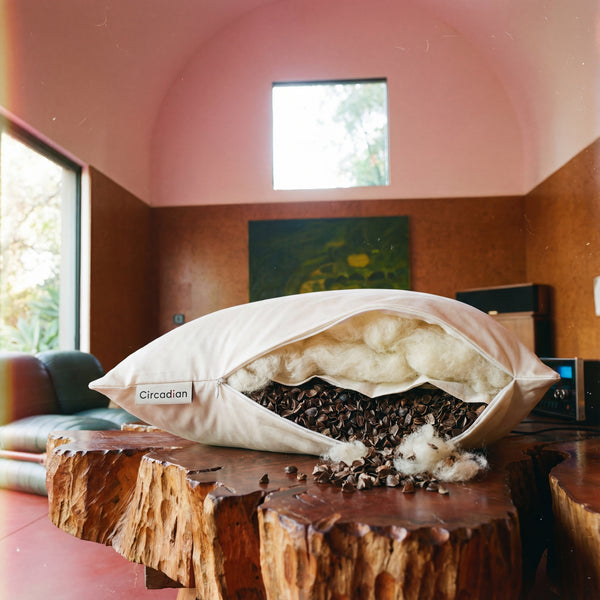
Buckwool Hybrid
From $99Best for: neck pain, combination sleepers.
Two pillows in one. Firm buckwheat and soft wool, each side adjustable on its own.
View pillow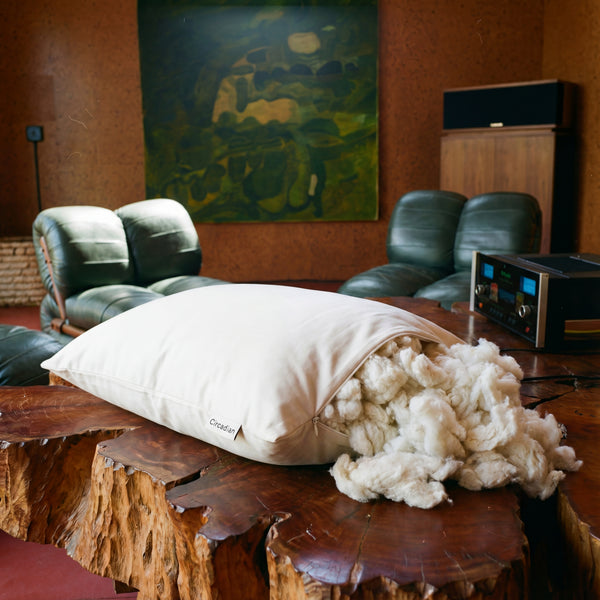
Organic Cotton
From $89Best for: back sleepers, GOTS-certified organic everything.
Our most tightly packed fiber fill. Holds its shape for years, GOTS-certified organic end to end.
View pillow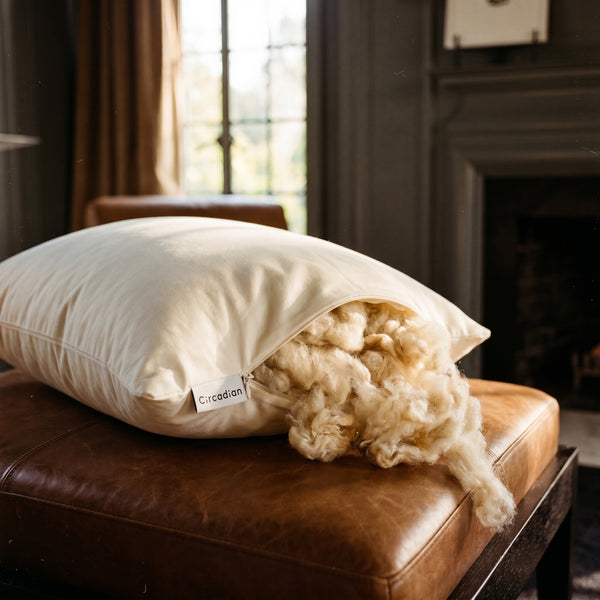
Organic Wool
From $99Best for: hot sleepers, dust allergies.
Wicks up to 30% of its weight in moisture. Naturally regulates temperature and holds the air too dry for dust mites.
View pillow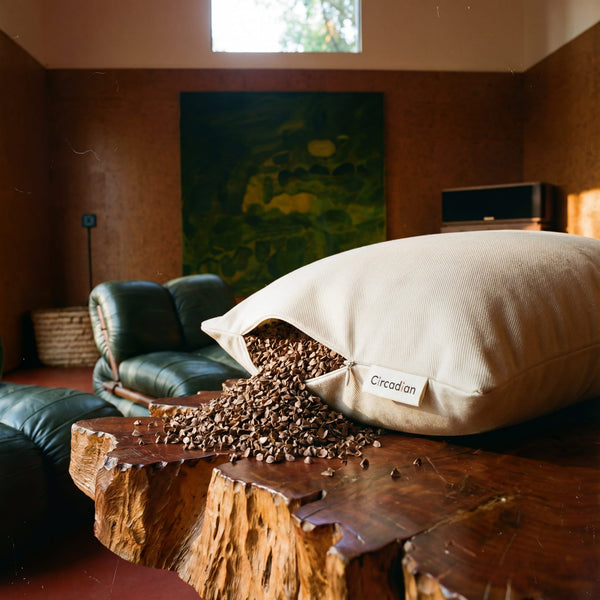
Buckwheat
From $89Best for: neck pain, side sleepers.
Hulls flex and lock to your neck shape. Stays cool all night, and most people get three to five years from a hull load before refreshing.
View pillow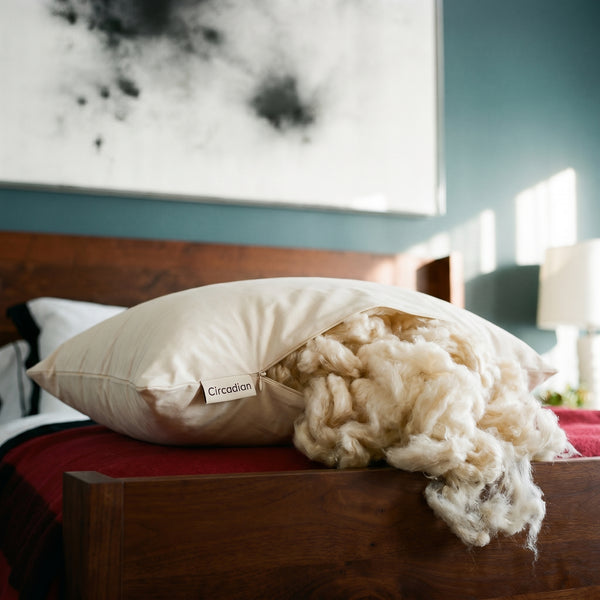
Wild-Harvested Kapok
From $79Best for: chemical sensitivities, vegans, stomach sleepers.
Plant-based and down-like. Hollow fibers are 80 to 90% air, so it stays cool and fluffs up like down.
View pillow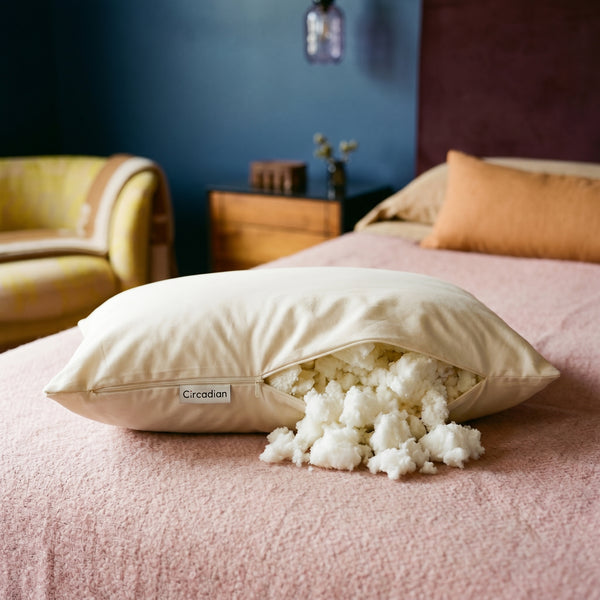
Tree-Tapped Latex
From $89Best for: people leaving memory foam.
Slow-pour Dunlop with an open-cell structure that breathes. Light, bouncy, and responsive, it springs back instead of sinking.
View pillowThe ones people filmed themselves.
Not our shoot. Tap any one to go to the post it came from.
Six brands out of fifty-eight still tie a duvet by hand.
Almost the whole category quilts, box-stitches or channel-stitches, because a machine can do it in minutes. We surveyed fifty-eight brands and six make a hand-tie claim at all.

Anchored, not sewn into channels
Fill in a channel migrates along that channel until one end goes thin, which is where the cold corner at your feet comes from. Anchoring holds the batting at points across the whole duvet instead.
It works because the fill is cotton
Long-staple cotton arrives as one cohesive layer, so a point anchor holds it. Down is loose cluster and needs walls to stay put. The construction and the material only make sense together.
Tied by hand in New Jersey
Every anchor point is placed by a person. It is the slowest thing in the workshop and the reason the duvet still lies flat after a decade of being pulled around.
It is the insert. The cover is what you wash.
Treat it the way you would treat a good duvet: keep it inside a cover and the duvet itself barely ever needs attention.
Put it in a cover.
Always. Tie the corner loops to the ties inside the cover so the insert cannot shift, then let the cover take all the wear and washing.
Shake it out now and then.
A shake keeps the fill even. Because it is tufted throughout, it will not drift far in the first place.
Air it in the sun.
A few hours of sunlight freshens it and drives out any moisture it has picked up.
Spot clean anything that lands on it.
Sponge with cool water and let it air dry fully before it goes back in the cover. It is not machine washable and it is not dry cleanable.

How to live with it.
A duvet insert wants three things from you, and a washing machine is not one of them.

Keep it in a cover
The cover takes every bit of the wear and all of the washing. Tie the corner loops in and the insert stays put underneath.
Shake it out
A shake keeps the fill even across the whole duvet. Because it is tufted throughout it will not have drifted far in the first place.
Air it in the sun
A few hours of sunlight drives out any moisture it has picked up and freshens it without water touching it.
Spot clean only. Do not machine wash the duvet.
Use a cover
The duvet is the insert. There are corner loops on it that tie into the loops inside a cover, so it cannot slide around once it is in.
Spot clean and sun only
Sponge spots with cool water and let it dry fully. Do not machine wash it, do not tumble dry it, and do not send it to a dry cleaner.
Air it in the sun
A few hours of sunlight each season keeps it fresh and dry.
Keep it in a cover and it stays clean for years, about ten to fifteen of them. The hand-tufting holds the fill in place, so it stays even for the life of the duvet.
The ones we hear most.
No, and it should not go to a dry cleaner either. Keep it in a cover, wash the cover, spot clean the duvet itself and air it in the sun. Kept that way it lasts ten to fifteen years.
Cotton insulates by trapping air the same way down does, and this one is dense enough for a cool bedroom. If you run cold or your room drops below about 16C, the wool duvet is the warmer of the two.
Almost every duvet sold as a down alternative is polyester, which is plastic. This one is cotton. That is the entire difference, and it is why it breathes instead of trapping your heat.
Most people size up one from their mattress so there is enough drape on both sides. A Queen mattress with two sleepers is the classic case for a King duvet.
What goes well with this one.
The organic cotton pillow
Cotton settles into a lower, denser shape than wool, which suits stomach sleepers and anyone who has been sleeping without a pillow. GOTS Certified Organic on the fill and the cover both.
See the cotton pillowThe organic wool pillow
Organic wool springs back rather than packing flat, and the side zipper lets you take fill out until the height is yours. GOTS Certified Organic on the fill and the cover both.
See the wool pillowThat is everything. Sleep well.
Any question at all, write to jacob@circadianrest.com. Jacob reads and answers these himself.
