

Buy two, save 15%. Applied automatically at checkout. No code.
Best Non-Toxic Pillow

A non-toxic pillow is one that doesn't put chemicals between you and 8 hours of breathing each night. The list of chemicals most conventional pillows contain is longer than most people realize. Flame retardants required by federal law, formaldehyde-based wrinkle resisters, anti-microbial sprays, synthetic fabric softeners, chlorine bleaches, petroleum-derived polyester, and the PFAS coatings that make pillows stain-resistant. Every one of those continues off-gassing for months after the pillow comes out of the package.
What you're looking for instead is third-party certification through the full supply chain, not just a marketing claim. The two that matter:
- GOTS (Global Organic Textile Standard) bans chlorine bleaching, formaldehyde finishes, synthetic dyes, and over 250 substances. Covers fill, cover, thread, and dye process. Circadian's license is GOTS-10229, searchable in the public Oregon Tilth database.
- OEKO-TEX Standard 100 tests finished products for over 100 harmful substances including carcinogens, heavy metals, formaldehyde, phthalates, and VOC residues.
Organic Cotton Pillow
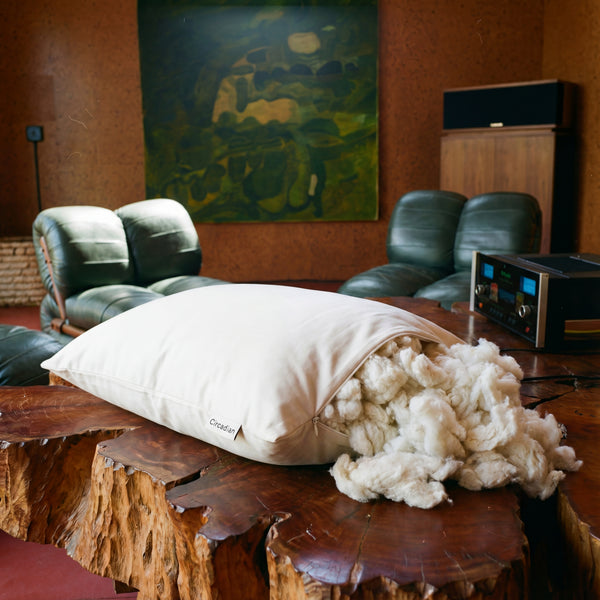
GOTS Certified Organic end to end under license GOTS-10229. Dense, durable, holds shape for years. The bestseller, partly because it's the easiest transition for first-time natural sleepers and supportive from the first night.
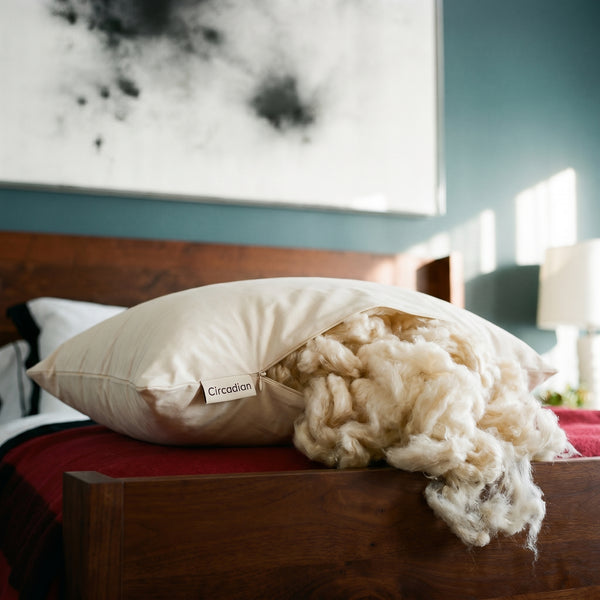
Organic Wool Pillow
GOTS Certified Organic wool fill plus GOTS Certified Organic cotton cover. Wool wicks up to 30 percent of its weight in moisture while staying dry, which is why hot sleepers choose it, and it resists dust mites naturally through three properties of the fiber itself.
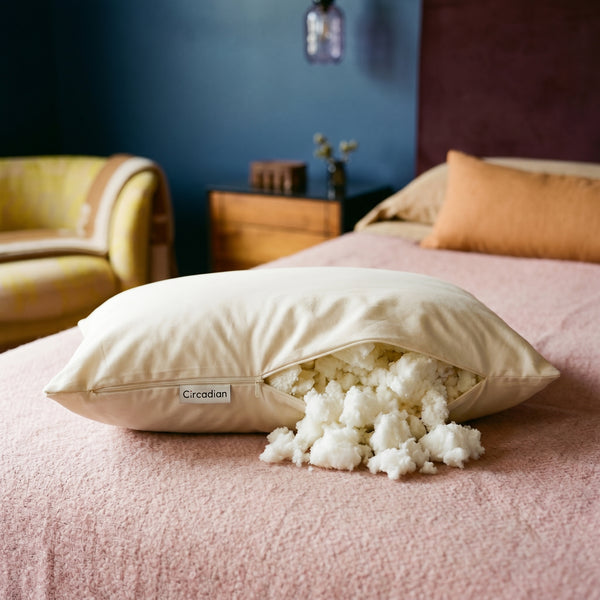
Wild-Harvested Kapok Pillow
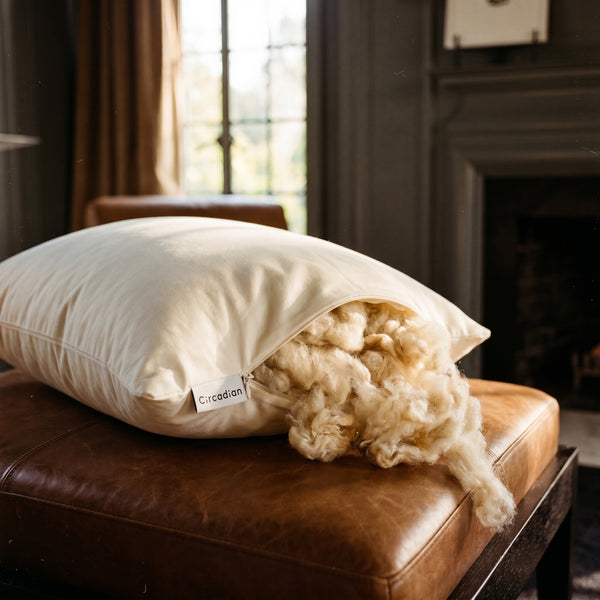
The shortest supply chain in the lineup. Kapok pods drop from tropical trees seasonally and are manually picked clean, then sent to our New Jersey workshop. No chemical processing exists in the kapok supply chain because the steps that introduce residues do not exist. Cover is organic cotton. Soft, lofty, down-like, and the most common recommendation for sleepers with reactive airways or chemical sensitivities.
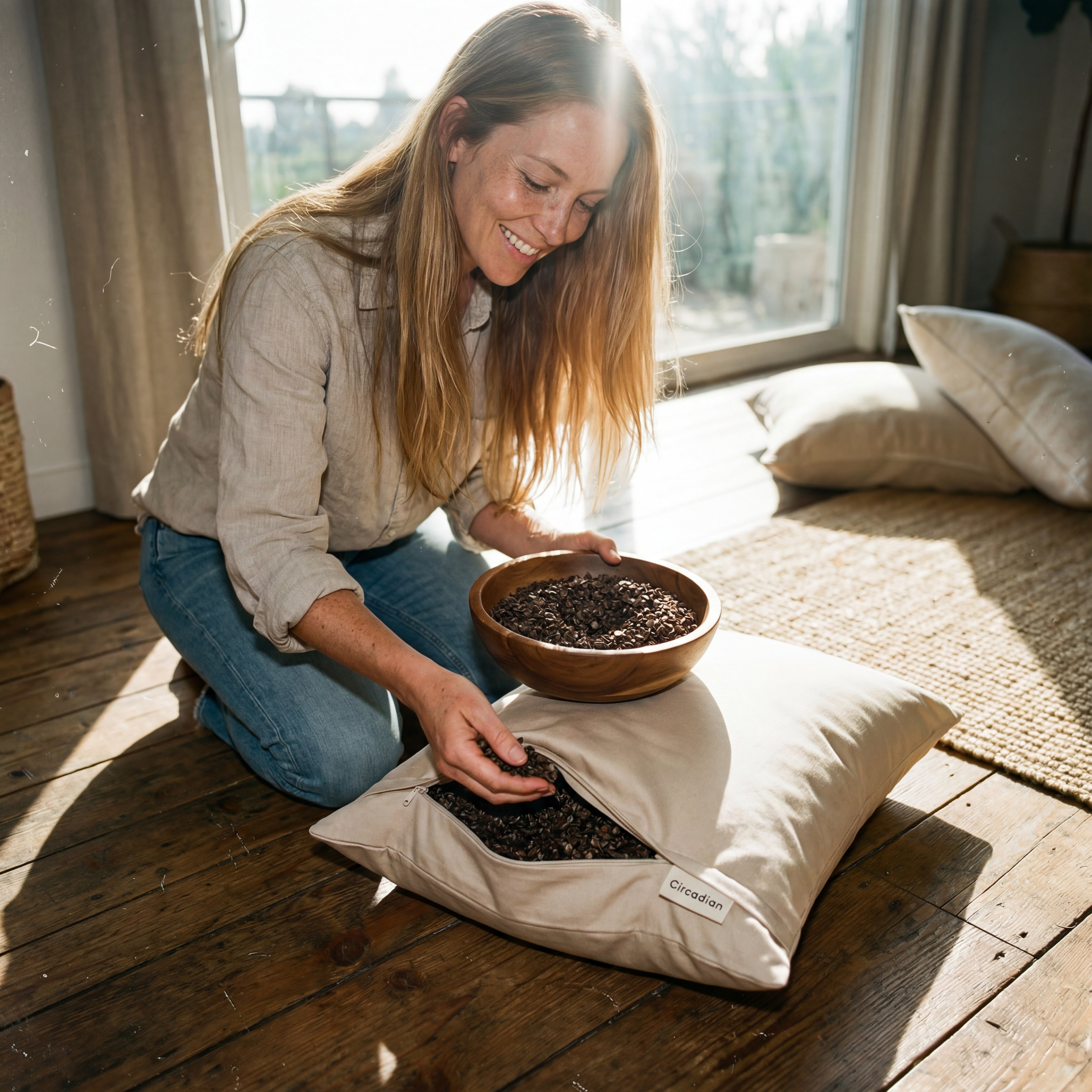
Buckwheat Pillow
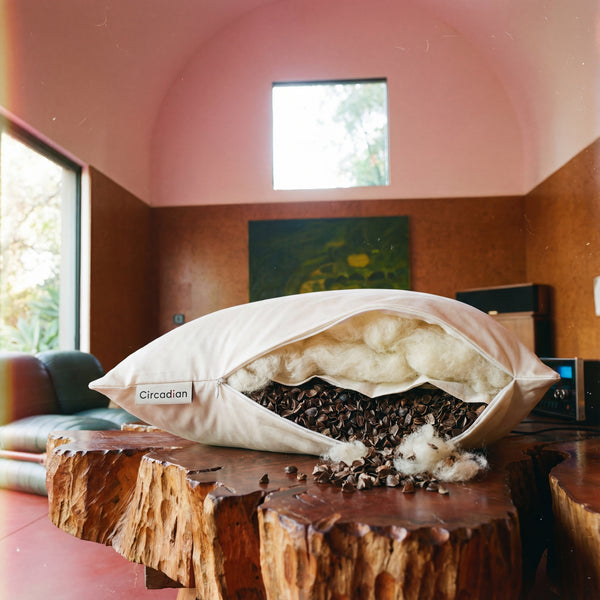
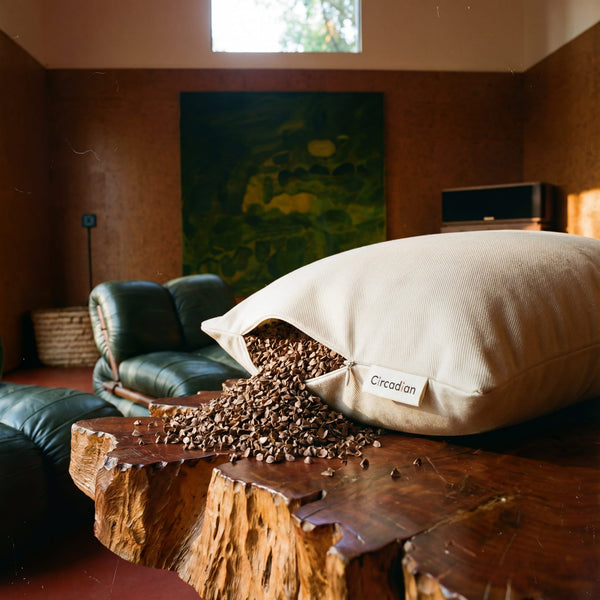
USA-grown buckwheat hulls without synthetic pesticide treatment. The hulls are inert and odorless. Cover is organic cotton. Firm cervical support and naturally cool through passive airflow between the hulls.
Tree-Tapped Latex Pillow
Slow-pour Dunlop latex tapped from rubber trees (Hevea brasiliensis), the same way maple syrup is tapped from maple trees. OEKO-TEX Standard 100 Class 1, the strictest tier, plus FSC certification on the rubber-tree source. Open-cell structure breathes through the night for a light, airy feel. Contraindicated for latex allergies.
Buckwool Hybrid Pillow
One side buckwheat, one side organic wool. The wool side and cotton cover carry full GOTS Certified Organic coverage under license GOTS-10229. Two chambers, one zipper, each adjusts independently.
What we don't use, ever
Every Circadian pillow is made without flame retardants, PFAS, formaldehyde finishes, polyester fill, synthetic dyes, anti-microbial sprays, or chemical fragrances. We don't certify around them, we leave them out entirely, and you can verify it through the GOTS-10229 license and the OEKO-TEX certificate on the latex.
60-night sleep trial. Free returns both ways. Every Circadian pillow is handmade in a New Jersey workshop that has produced certified natural bedding since 1981.
Common questions
What chemicals do most pillows contain?
Most pillows contain some combination of flame retardants (federally required on many products), formaldehyde-based wrinkle resisters, anti-microbial sprays, fabric softeners, synthetic dyes, polyester fill, and PFAS stain-resistant coatings. None are present in Circadian pillows.
Are organic pillows the same as non-toxic pillows?
Organic and non-toxic overlap but aren't identical. GOTS Certified Organic guarantees the absence of the chemicals listed above when the certification covers the full supply chain (fill, cover, thread, dye process). Look for the GOTS license number. Circadian's is GOTS-10229.
How do I verify a pillow is actually non-toxic?
Look for a license number on a recognized certification. For organic textile certifications, GOTS license numbers are searchable in the Oregon Tilth public database. For non-organic materials like latex, look for OEKO-TEX Standard 100 certification numbers.
Curious how the latex earns its OEKO-TEX Standard 100 Class 1 rating? Watch what slow-pour Dunlop latex is, and why it is safe, with the full transcript.