The hulls are smoother than I expected
I've slept on cheaper buckwheat pillows and the hulls were sharp and loud. These feel like they've been worked over. Quieter and softer against the pillowcase.



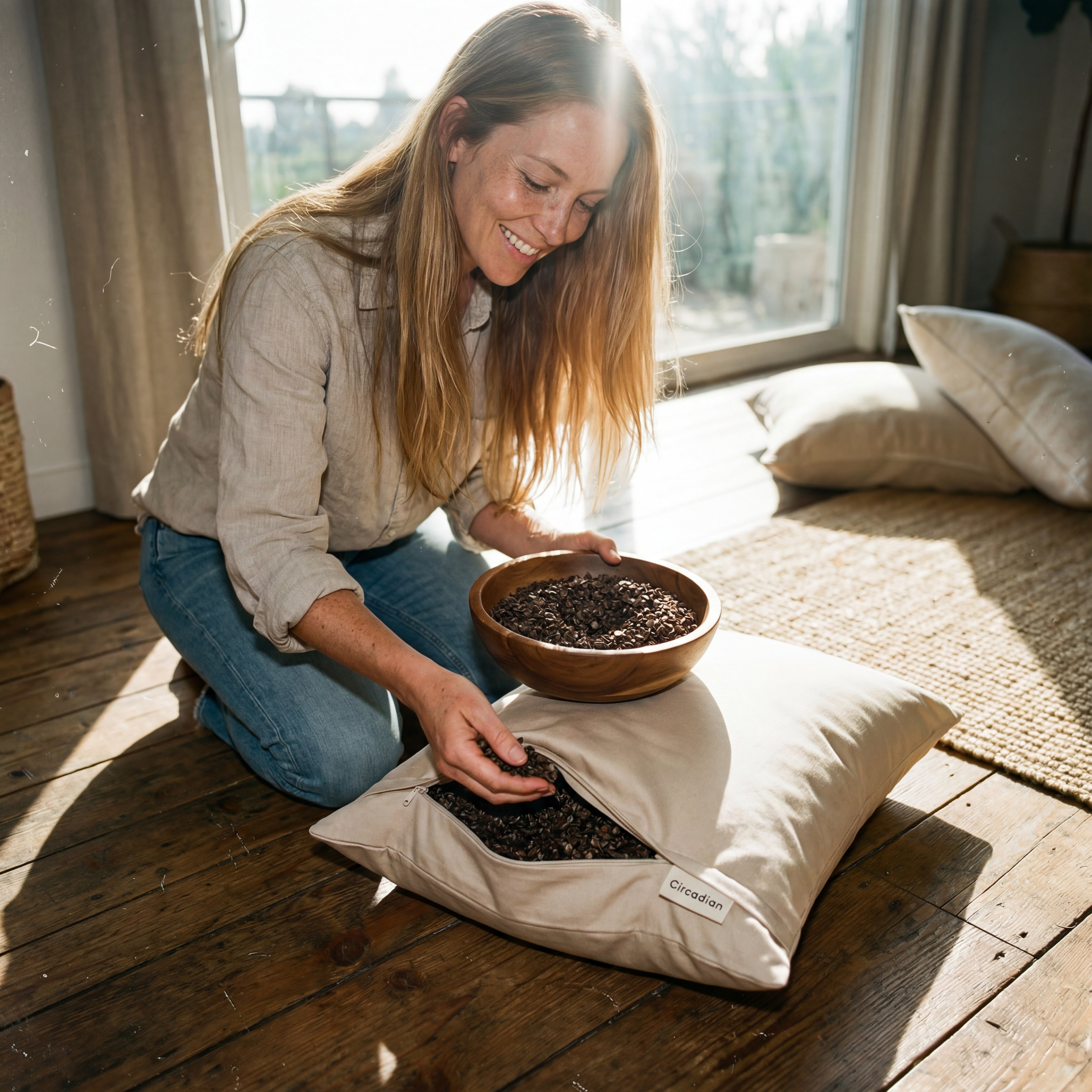


The pillow that molds to your neck and holds the shape. Pre-polished USA-grown hulls, air-jet cleaned and UV-sterilized.
No pesticides, microplastics, formaldehyde, or PFAS.
Handmade in our New Jersey workshop since 1981.
 60-Night Trial
We need to tell you something upfront. Buckwheat makes a gentle rustling noise when you move your head. Most people stop noticing it within a week as their brain learns it's not something worth waking up for. But roughly one in five people can't get past it. The sound stays distracting. If that's you, send it back during the 60-night trial and we'll refund every penny. No hard feelings. We'd rather you find the right pillow than force yourself onto the wrong one.
 Free Shipping & Returns
Free shipping, free returns. Most orders arrive in 4 to 7 days. Buckwheat requires an acclimation period, and we want you to experience that in your bed, not read about it on a product page. We pay for the shipping because finding out whether buckwheat works for you shouldn't cost anything.
 Pre-Polished USA-Grown Buckwheat Hulls
The hulls are grown in the United States and arrive without any synthetic pesticide treatment or chemical processing. Buckwheat hulls are the leftover shells from buckwheat grain harvesting, so you're sleeping on a natural agricultural byproduct. Nothing is added to them. The organic cotton cover that holds them is GOTS certified.
 Adjustable Fill (Zipper Access)
Each handful of hulls you add or remove changes how the pillow behaves. More hulls means deeper moldability and firmer support. Fewer hulls means a lighter, lower-profile pillow. The zipper gives you control over how much support you want, and you can change it anytime your neck needs something different.
 Designed in DC · Handmade in New Jersey
Each pillow is weighed, filled, and sewn by hand. Buckwheat hulls need careful distribution to avoid overpacking one area and underpacking another. Machine filling can't account for the way hulls settle. Our team can.
 Pre-Polished, for Quieter and Softer Buckwheat
Buckwheat hulls are naturally porous, and air circulates between them constantly. Heat doesn't build up. The pillow stays cool all night without any cooling gel, phase-change material, or special fabric. This is passive airflow created by the structure of the hulls themselves. For hot sleepers who also need firm support, there isn't a better combination.
People don't search for buckwheat pillows out of curiosity. They search because something hurts. Their neck, usually. Maybe their upper back. They've tried memory foam and woken up with their head sunk into a warm crater. They've tried down and woken up on a flat disc. They've been to a physical therapist who told them they need something that supports their cervical curve and holds their head stable while they sleep.
Buckwheat does this better than any other pillow material because the hulls don't compress. They flex slightly under the weight of your head and then lock together, creating a firm surface that conforms to your specific neck shape and then stays there. Your head doesn't slowly sink through the pillow overnight. It stays where you put it.
The hulls themselves are different from what most buckwheat pillows contain. Typical buckwheat pillows use roasted hulls that come out as 3-sided pyramids, and those pointy edges are the reason the category has a reputation for being crunchy and loud against the face. Our hulls go through an air-jet cleaning process that breaks them into single-sided polished pieces, cutting the crunch by roughly 60 percent and making the surface noticeably softer against your skin while preserving the flex-and-lock cervical support buckwheat is known for.
Trade-offs worth knowing. Buckwheat is firm and heavy. The hulls hold the position your head sets into them, which is the whole point of buckwheat. Your head sits on the pillow rather than sinking in. If you've been on memory foam, that's an adjustment, usually a week or so. The hulls also make a slight rustling sound as they shift. Ours are pre-polished, triple-cleaned, and unroasted, which makes them softer and quieter than the rougher hulls in most buckwheat pillows. Most people stop noticing the sound by the end of the first week. On weight, the pillow comes in around 8 pounds. That keeps it planted on your bed and is part of why the support is so stable, but it isn't something you'd travel with.
My PT told me to find a pillow that supports the cervical curve and doesn't compress. Memory foam made me wake up with my head sunk in a hole. Buckwheat actually holds the shape. First week is weird with the sound. I don't notice it anymore.
I've slept on cheaper buckwheat pillows and the hulls were sharp and loud. These feel like they've been worked over. Quieter and softer against the pillowcase.
Used to flip my pillow looking for the cold side. There's no warm side with buckwheat. Air just moves through it. Game over for hot-side flippers.

Inside the pillow
These hulls come from the same buckwheat plant that produces buckwheat flour. We use the shells that separate from the grain during processing, which would otherwise be agricultural waste.
Each hull is pre-polished and air-jet cleaned, reducing movement noise by up to 68 percent compared to unpolished hulls.
Standard buckwheat hulls are rough pyramid shapes with sharp pointed edges. Our pre-polishing process breaks those pyramids into individual flat sides, creating smoother components that sit quieter against the pillowcase and gentler against skin. The hulls then go through UV sterilization with no chemicals involved. Under your head, the hulls flex slightly and interlock, creating firm cervical support that does not compress like foam. Air circulates freely between the hulls, keeping the surface 3 to 5 degrees cooler than foam alternatives without any gel or phase-change material.
Every Circadian pillow ships overstuffed. You dial it in on night one and fine-tune over the trial. The pillow you've shaped is yours to keep.
About 30% more fill than most people want. The room to remove fill is the whole point.
Full-length YKK zipper. Open the buckwheat on night one.
Side sleepers keep more in. Back sleepers go medium. Stomach sleepers go thin.
If the loft feels off a few weeks in, put some back or take more out.
Not for you after 60 nights? Full refund. Shipping both ways on us.
Refill buckwheat sold separately if you want to bring the loft back up after years of use.

I'm Jacob, founder of Circadian. Every pillow I tried either flattened in three months or hid a list of chemicals you'd need a glossary to read, so we built one that doesn't do either.
Jacob
Founder, Circadian
Spine alignment · Buckwheat
Your spine stays neutral when the pillow fills the gap between head and mattress. That gap is different for back, side, and stomach sleepers.

Buckwheat is best for back and side sleepers because the hulls lock into firm cervical support and don't compress. Stomach sleepers can mold the hulls flat or pour some out through the side zipper, but if you want soft and low all the way down, cotton or kapok is the better fit.
A high pillow tips your head back and overextends your neck. Most stomach sleepers want very little loft, or none.
Press the buckwheat flat so your head and shoulders sit close to level with the mattress.
Supports the natural curve of your neck so your chin sits level and the small space behind your neck is filled in.
Mold the buckwheat until your head sits level with your shoulders.
Fills the gap between shoulder and ear so your spine runs in a single horizontal line from skull to hip.
Mold the buckwheat until your ear, shoulder, and hip stack along one straight line.
Six fills. All adjustable. All handmade in New Jersey.

Best for: neck pain, combination sleepers.
Two pillows in one. Firm buckwheat and soft wool, each side adjustable on its own.
View pillow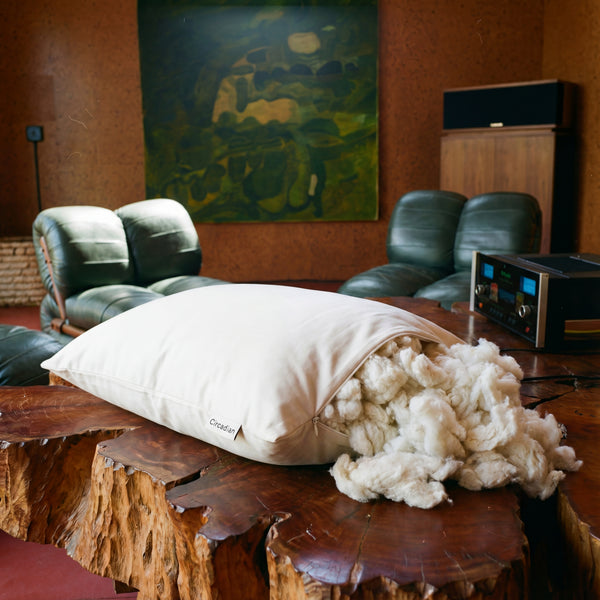
Best for: back sleepers, GOTS-certified everything.
Densest natural fill we make. Holds shape for years and is GOTS-certified end to end.
View pillow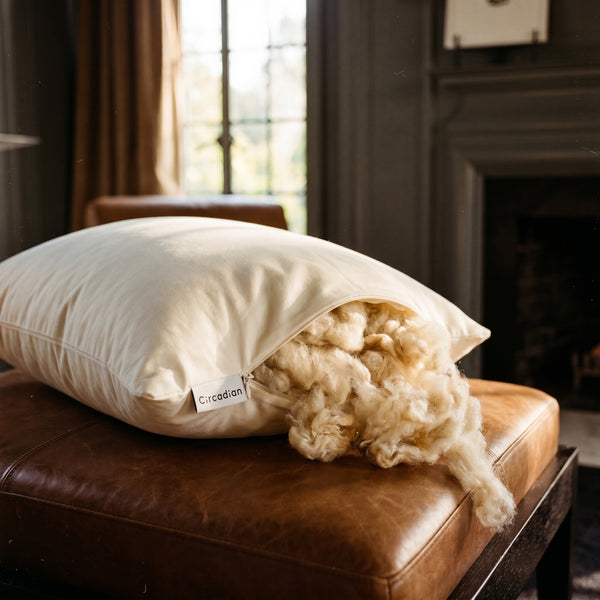
Best for: hot sleepers, dust allergies.
Wicks up to 30% of its weight in moisture. Naturally regulates temperature and resists dust mites.
View pillow
Best for: neck pain, side sleepers.
Hulls flex and lock to your neck shape. Stays cool all night and lasts 7 to 10 years.
View pillow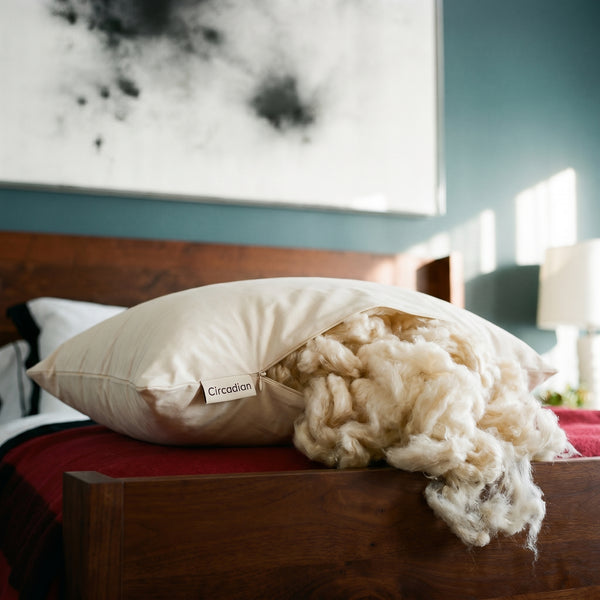
Best for: chemical sensitivities, vegans, stomach sleepers.
Plant-based and down-like. Hollow fibers are 80% air. Zero chemical processing at any stage.
View pillow
Best for: people leaving memory foam.
Dunlop latex with an open-cell structure that breathes. Firm and supportive, holds its shape under your head.
View pillowCertified. Verifiable. Public.
Cheap buckwheat pillows roast their hulls to make them harder. Roasting makes the hulls louder, more brittle, and releases carcinogenic compounds as the material breaks down over time. Other pillows use imported hulls with pesticide residue from non-organic farming, or skip the polishing step entirely. Those are the buckwheat pillows that rustle the loudest and feel sharpest against your skin. Our hulls are USA-grown without pesticides, pre-polished and air-jet cleaned in a proprietary process that reduces noise by up to 68 percent compared to standard hulls, then UV-sterilized without chemicals. The cover is organic cotton twill.
Yes. Buckwheat pillows make a gentle rustling sound when you move your head, similar to dry leaves or a beanbag. Most people stop noticing the sound within three to seven nights as their brain classifies it as harmless background noise. About one in five people find the sound persistently distracting and prefer a different pillow material.
Buckwheat is one of the best pillow materials for neck pain because the hulls don't compress under your head weight. They flex slightly and then lock in place, supporting your cervical spine in a stable position all night. This prevents the gradual sinking that causes neck misalignment with softer pillow materials. Many physical therapists recommend firm cervical support, which is what buckwheat provides.
A standard buckwheat pillow weighs approximately 8 pounds, making it significantly heavier than cotton (3 to 4 pounds), wool (3 to 4 pounds), or kapok (2 pounds). The weight is part of what makes buckwheat so stable on your bed, but it also means this isn't an ideal travel pillow.
Most people adjust within three to seven nights. The first few nights, you'll notice the firmness and the sound. By night three or four, the firmness typically feels normal. By night seven, most people have tuned out the rustling. If you're still uncomfortable after two weeks, buckwheat may not be the right material for you.
Yes. Buckwheat pillows are naturally one of the coolest pillow types available because air circulates freely between the hulls. There's no gel, no phase-change material, and no special fabric involved. The cooling comes from the physical structure of the fill, which means it works consistently without wearing off.
Open the side zipper and remove hulls for a lower, lighter pillow, or add hulls for more height and firmer support. Each handful of hulls creates a noticeable difference. Store extra hulls in a sealed bag so you can add them back later if your preference changes.
The buckwheat hulls in the Circadian buckwheat pillow are USA-grown and not treated with synthetic pesticides or chemical processing. However, we don't label the buckwheat itself as "organic" because the hull supply chain doesn't carry a formal organic certification. The organic cotton cover that wraps the hulls is GOTS certified.
Memory foam conforms to your head shape but slowly compresses, allowing your head to sink deeper as the night goes on. Buckwheat hulls flex under pressure but don't compress, so your head stays at the height you set it. For people who need stable cervical support throughout the night, buckwheat provides firmer, more consistent positioning than memory foam.
Yes. Side sleepers typically need a taller, firmer pillow to fill the space between their shoulder and head. Buckwheat works well for this because you can add hulls through the zipper to build up height without losing firmness. Keep the pillow relatively full if you sleep on your side.
No. Buckwheat hulls are a dried agricultural product, similar to rice husks or nut shells. They don't contain moisture or organic material that would attract insects or support mold growth under normal bedroom conditions. If the pillow gets soaked and isn't dried, mold could develop, but this is true of any pillow material.
Buckwheat hulls gradually break down into smaller fragments over several years of nightly use. Most people get three to five years from a buckwheat pillow before the hulls need replacing. The organic cotton cover and zipper mechanism last longer than the hulls. You can also order replacement hulls rather than replacing the entire pillow.
Buckwheat works well for back sleepers and side sleepers who need firm cervical support. Back sleepers benefit from the moldable support that holds the natural curve of the neck. Side sleepers benefit from the height and firmness. Stomach sleepers may find buckwheat too firm and too tall unless they remove a significant amount of fill.